Michelle Culver on Why Transformation Moves at the Speed of Trust
Part of our Responsible Tech Voices series, featuring leaders from All Tech Is Human’s 2026 Responsible Tech Guide.
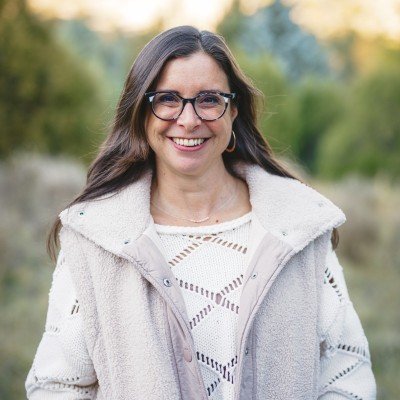
Michelle Culver began her career teaching fifth grade in Compton, California, during Teach For America's early days, an experience that left her with lasting faith in young people's ingenuity. As founder of The Rithm Project, she's focused on keeping human connection at the center as AI reshapes how we live and relate to one another.
How did you get here?
I started my career teaching 5th grade in Compton, back when Teach For America was still a scrappy startup. I’m forever grateful for the chance to orient my professional identity driven by values and the belief that when people come together around a bold vision, anything is possible. We were all young back then- growing the organization to scale- and I think that experience keeps me grounded in the power of young people’s ingenuity, courage, candor and creativity. We need all of that in this moment. If you are following a similar path, trust that while it may be nonlinear, you will never lack for purpose. I’m convinced that vision, values and purpose will become increasingly more prized in the age of AI.
What has surprised you most along the way?
I continue to be surprised by the power of convening when you take the time to demonstrate deep care for participants, create the conditions where divergence is valued and folks are invited to both innovate and build. Transformation happens at the speed of trust and taking the time to nourish those conditions always pays off.
What's one action you'd like to see?
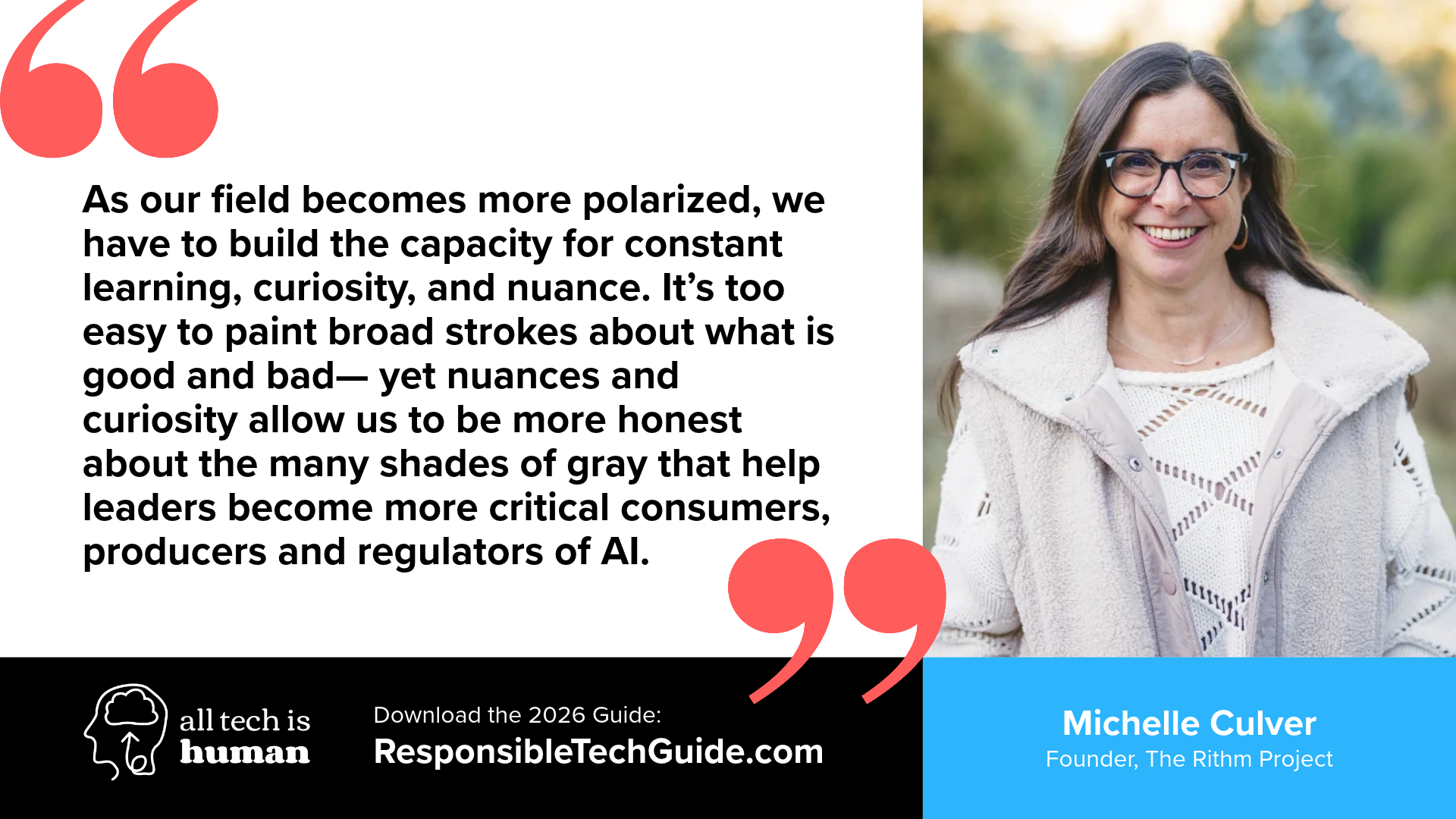
I would love for us to choose more multigenerational, judgement free conversations about AI. As our field becomes more polarized, we have to build the capacity for constant learning, curiosity and nuance. It’s too easy to paint broad strokes about what is good and bad— yet nuances and curiosity allow us to be more honest about the many shades of gray that help leaders become more critical consumers, producers and regulators of AI. Let’s make this more “talkable” so we can learn and lead at the pace of this innovation.
What does a better tech future look like to you?
A better tech future is one in which human connection is held sacred and we use AI to bring us closer together instead of further apart.
Learn more about The Rithm Project here. Read the full Responsible Tech Guide, where this interview came from.
Learn more about The Rithm Project here. Want more perspectives like this? Read the full Responsible Tech Guide, coming October 15, 2026.
