Two Views of the Same Transformation: AI Adoption, Invisible Work, and the Human Side of Organizational Change
Download the new whitepaper by All Tech Is Human and Notre Dame-IBM Technology Ethics Lab, Two Views of the Same Transformation: AI Adoption, Invisible Work, and the Human Side of Organizational Change.
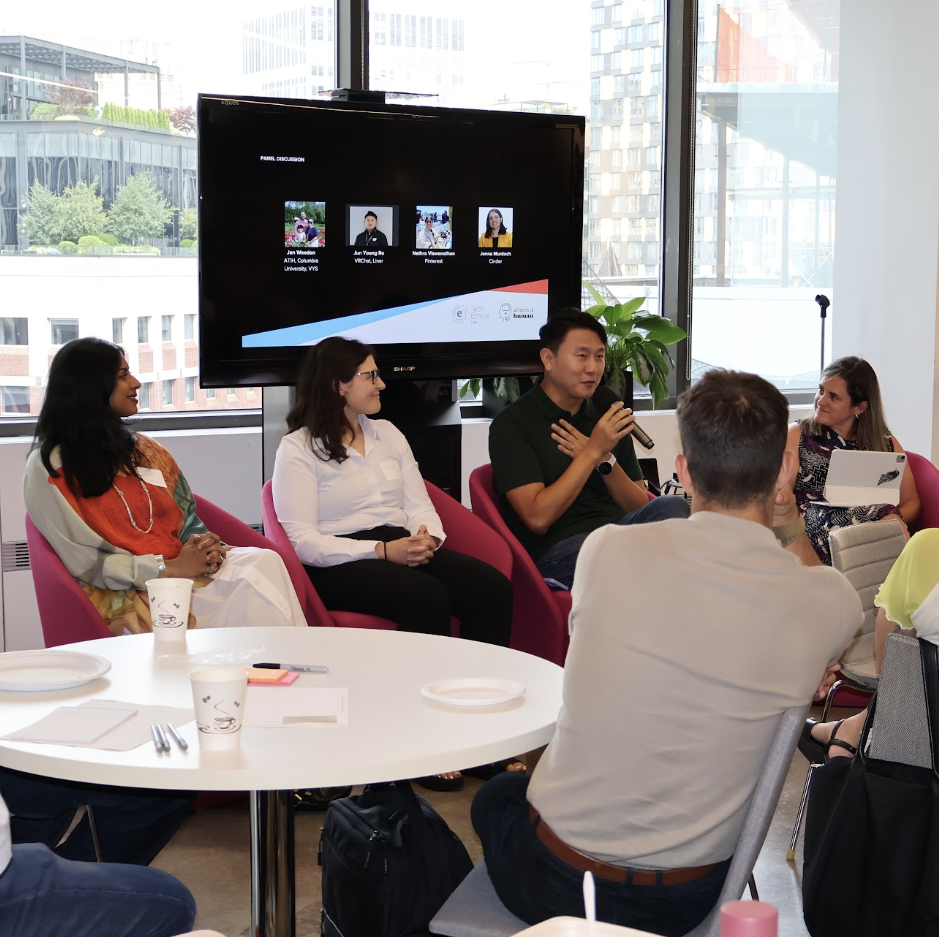
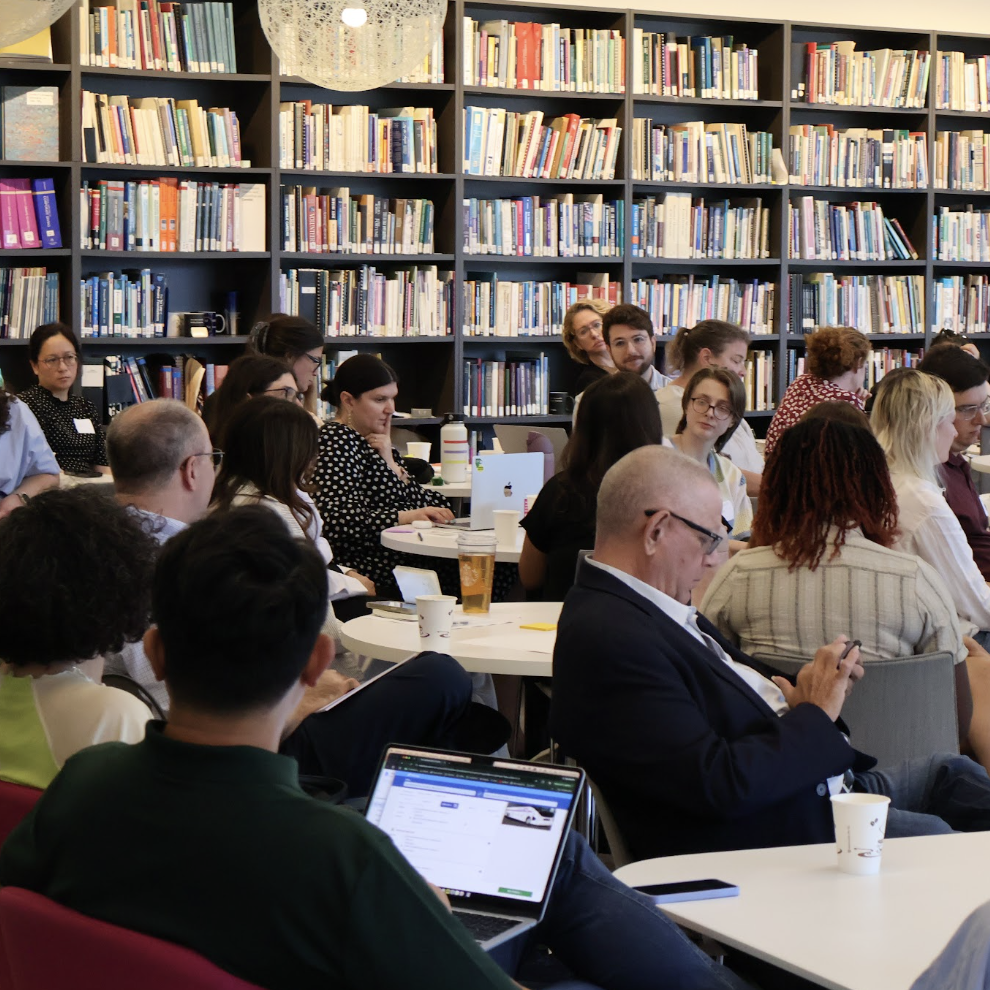
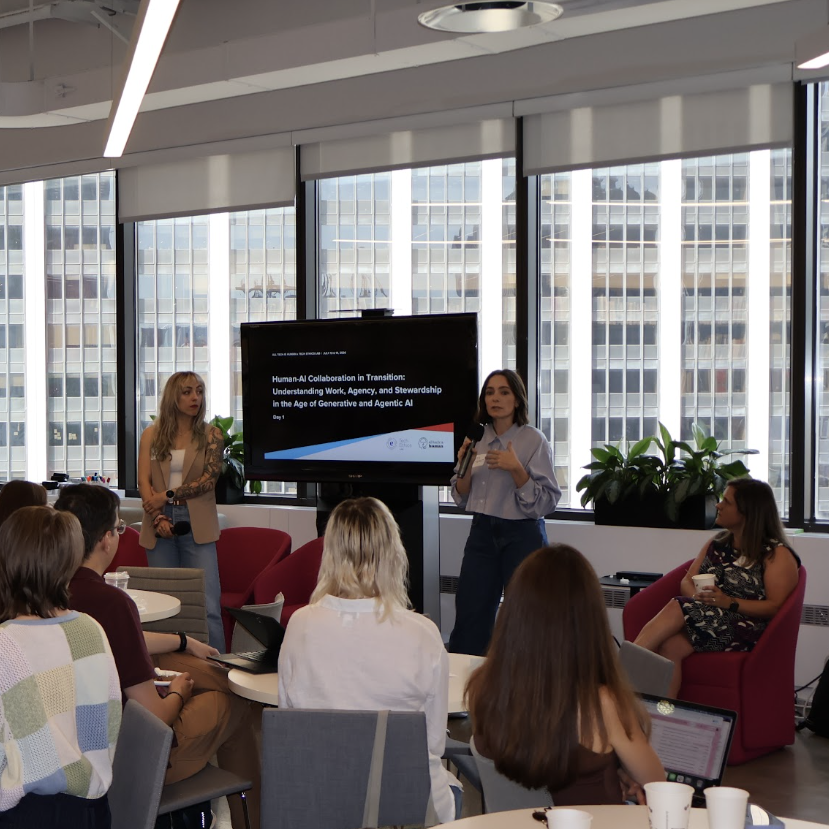
Photos from our two workshops in NYC on July 13 and July 14 (2026)
Using mirrored questions during two workshops, this research contrasts the perspectives of mid-level professionals and executives as it relates to how agentic and generative AI are reshaping the future of work.
Rather than just automating tasks, agentic and generative AI are reconfiguring workers’ lived experience, with technology rollouts often outpacing the ability of organizations – and the people within them – to adapt. Addressing topics including distributed deskilling, the rise of invisible labor and unmeasured glue work, misaligned metrics, and optimizing for speed over quality, this whitepaper examines AI's impacts at the human layer, not just the organizational one.


Three unique takeaways from the white paper:
Several compelling and sometimes counter-intuitive storylines emerged. By asking mid-level professionals and executives mirrored questions, our paper surfaces important disconnects in how AI adoption is understood and experienced across organizational levels.
The Rise of "Invisible Labor" and "Babysitting Slop"
Knowledge workers reported spending increasing amounts of time checking AI outputs for hallucinations, compliance, tone, and accuracy, with some mid-level workers describing this work as “babysitting AI slop,” and deeply demotivating. According to participants, the labor of validating AI outputs can rival or exceed the work the technologies were intended to augment or replace, but rarely factors into how senior leadership assesses the costs or benefits of AI adoption.The research also surfaces a broader category of unmeasured “glue work” required to make AI adoption function in practice: training employees, managing workforce anxiety, coordinating ad hoc task forces, and translating generic AI strategies into daily workflows that reflect teams’ actual needs. Like validation work, this labor is seldom accounted for in job responsibilities, performance measures, or assessments of AI's efficiency gains.
Metric Misalignment: "Token Maxxing" vs. Actual Value.
Organizations may be measuring what AI "produces" while failing to account for the work required to make those outputs usable. Participants described environments in which greater AI use translated quickly into higher output expectations and compressed timelines, even as validation and quality control work expanded and perceptions of work quality declined. For mid-level participants, this gap between measured “productivity” and lived workload carried a significant emotional toll, surfacing as burnout, anxiety, loss of professional identity, and organizational disillusionment.
The Middle Management Paradox
The white paper suggests that mid-level workers are performing much of the human coordination, translation, and quality control work that is critical to making AI adoption function in practice. Yet while some executives saw middle management as the layer that is ripe for flattening through AI efficiencies, they also expressed concern over the long-term implications of “distributed deskilling" (such as the loss of mentorship, institutional wisdom, and knowledge transfer). This creates a notable paradox, where organizations may be considering eliminating the very roles currently performing the work they are simultaneously worried about losing.
Do you have feedback about the white paper? A question for our team? Reach out!
This whitepaper stems from a collaboration between All Tech Is Human and Notre Dame-IBM Technology Ethics Lab, and was led by All Tech Is Human’s Braintrust member Jen Weedon. If you are with an organization or company looking to collaborate with All Tech Is Human for a future workshop and white paper, please reach out.