
Jennifer Siebel Newsom on Why Parents Shouldn't Be the Last Line of Defense
Part of our Responsible Tech Voices series, featuring leaders from All Tech Is Human’s 2026 Responsible Tech Guide.
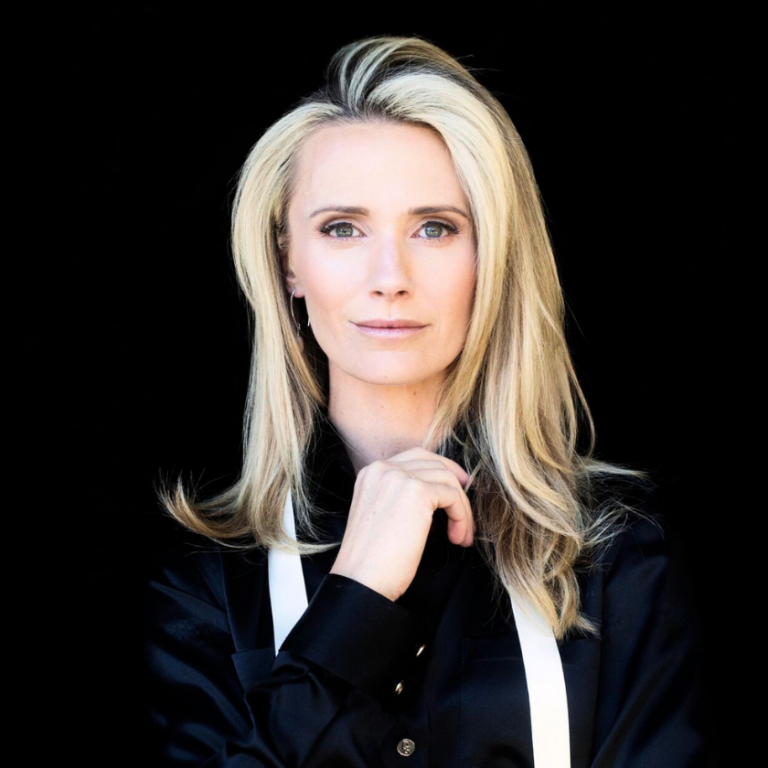
Filmmaker, advocate, mother of four, and California's First Partner, Jennifer Siebel Newsom has spent her career examining how media shapes young people. As cofounder of the California Partners Project, she treats gender equity and child well-being as a single challenge, and she's pushing for technology that builds safety in from the start.
How did you get here?
Throughout my career, I have always centered social impact efforts. From starting at Conservation International after college, to pursuing filmmaking, to beginning my role as California’s First Partner – my goal has been to make the world a place where everyone can thrive, especially women and children.
As First Partner and a mom of four, I saw technology reshaping childhood in my own home, and in 2020 I co-founded the California Partners Project to treat gender equity and child well-being as a single problem. The throughline of my career has been the media's effect on young people's mental health. My advice: listen first to those most affected, use storytelling, research and policy, and bring sectors together—because no one can solve these challenges alone.
What fields intersect in your work?
My work sits where gender equity, child well-being, and technology meet. In California, we have both a responsibility and an urgent need to balance innovation with safeguards for women and children, which is why I lead the California Innovation Council’s work on child online safety and countering image-based abuse. In California, we have both a responsibility and an urgent need to balance innovation with safeguards for women and children. But online safety is only half the work. We also need belonging and real-world connection. That’s why I champion access to parks, libraries, service, and the outdoors—and launched California Love, California Strong to fight loneliness. In a digital world, belonging has to be built on purpose.
What's one action you'd like to see?
I'd like to see us stop making children and their parents the last line of defense. No parent should have to outsmart an algorithm to keep their child safe. The action I want is simple: make safety the default, baked into design rather than left to parents to manage.
California is showing it can be done. Over the past two years, the Governor has signed laws requiring social media warning labels, age verification signals from app stores and operating systems, and safeguards on AI companion chatbots. This year, he signed Adam's Law, which requires independent child safety audits for companion chatbots, along with a ban on addictive features like autoplay and algorithmic feeds for kids under 16. Now that standard needs to reach every product meeting, not just the legislature.
What does a better tech future look like to you?
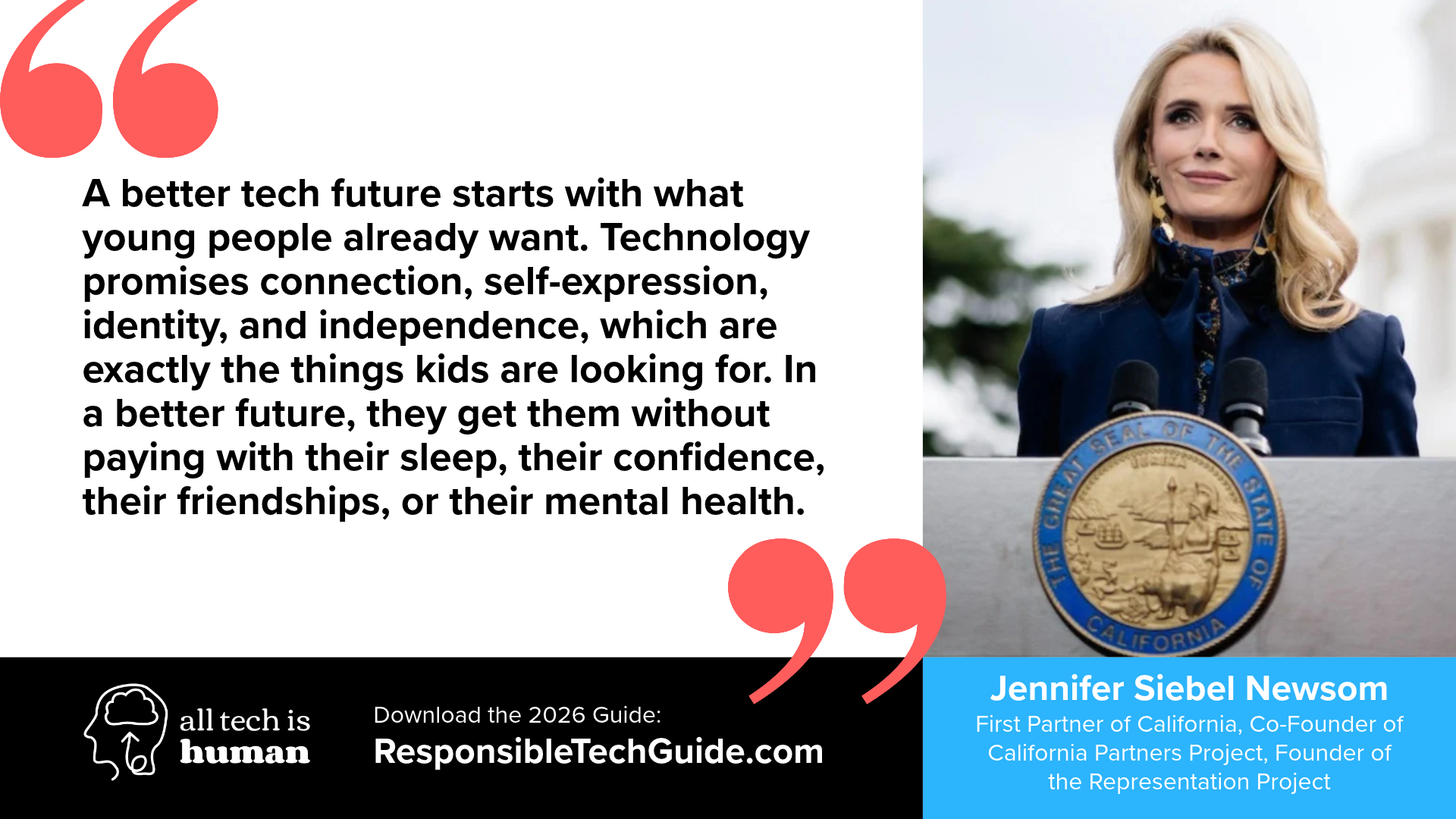
A better tech future starts with what young people already want. Technology promises connection, self-expression, identity, and independence, which are exactly the things kids are looking for. In a better future, they get them without paying with their sleep, their confidence, their friendships, or their mental health.
That means technology that helps kids connect with each other instead of replacing real relationships, with safety built into the product so parents aren't left to manage it alone. It means protecting the parts of childhood no app can replace: playing outside, reading books, being bored, and spending time with friends in person.
Learn more about the California Partners Project here. Want more perspectives like this? Read the full Responsible Tech Guide, where this interview was featured.