Michele Jawando: Don't Wait to Be Consulted
Part of our Responsible Tech Voices series, featuring leaders from All Tech Is Human’s 2026 Responsible Tech Guide.
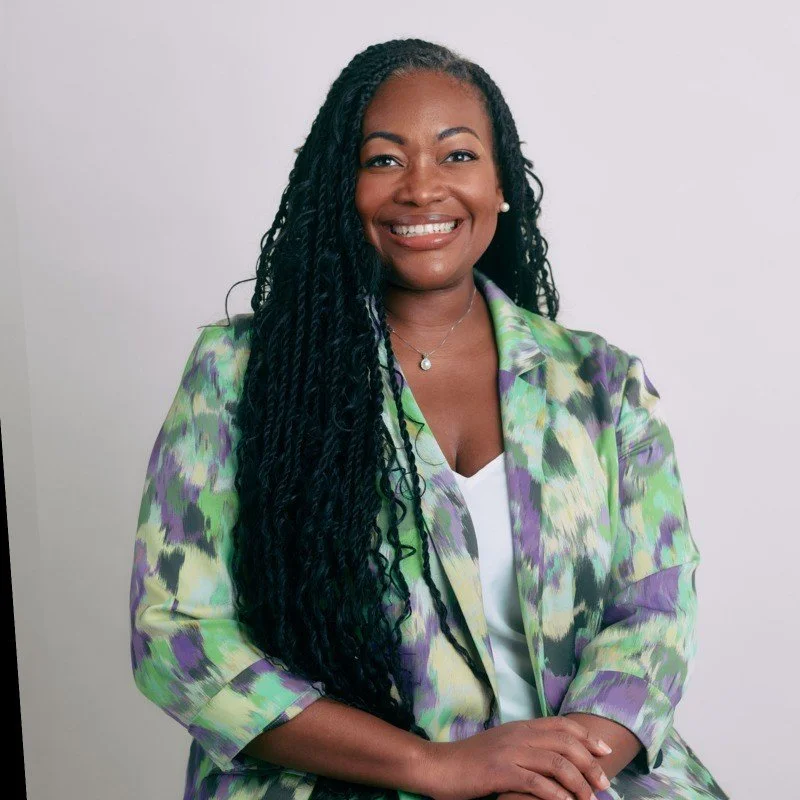
Michele L. Jawando has worked as a civil rights lawyer, Senate general counsel, and co-leader of Google's 2020 global election integrity work. Now CEO of Omidyar Network, she brings those perspectives together around a single question: who gets to shape the AI era?
What fields intersect in your work?
My career has spanned law, government, industry, and philanthropy. Each role has centered on the same questions: who has a voice, and who's being left out?
As a civil rights lawyer fighting discriminatory voter ID laws, I looked at power structurally. That’s how I look at AI now, examining how automated systems encode bias in hiring, housing, credit, and healthcare, and who has recourse when they get it wrong. As general counsel in the Senate, I saw how rules get written, and how much of the outcome is determined before anyone votes. At Google, I co-led the 2020 global election integrity work, where trust and safety meet democracy, moving at industry speed. And now, in philanthropy, I connect it all, asking who gets to shape the AI era. The terrain has changed; the stakes have not.
Why do those intersections matter?
No one has the whole picture on their own—everyone has something to bring. If we show up with only one discipline, we'll only ever solve part of the problem.
Government has the authority to set the rules. Industry has the means to innovate and scale. Civil society has trust. Each brings something the others can't.
We've seen what happens when those worlds come together through the organizations we support. For example, Humane Intelligence stress-tests AI systems to see where they break. It's not just engineers testing their own systems. It's community members, subject-matter experts, and technologists, catching things the others would miss. And the National Institute of Standards and Technology (NIST) has partnered on their red-teaming exercises. That's the intersection in action.
What's one action you'd like to see?
Don’t wait to be consulted.
Models were among the first to see what was coming with AI: their faces, their bodies, and their voices were turned into digital replicas they never agreed to and didn't get paid for. Model Alliance, a nonprofit we support, brought together workers, lawmakers, and technologists and formed New York's Fashion Workers Act, the first U.S. law regulating generative AI in any workplace sector. They're now expanding to set designers, makeup artists, and other fashion workers, and building licensing frameworks so AI companies and the people whose work fuels those systems can strike fair deals.
You don't need permission to have standing. Take your seat, and bring someone with you.
What does a better tech future look like to you?
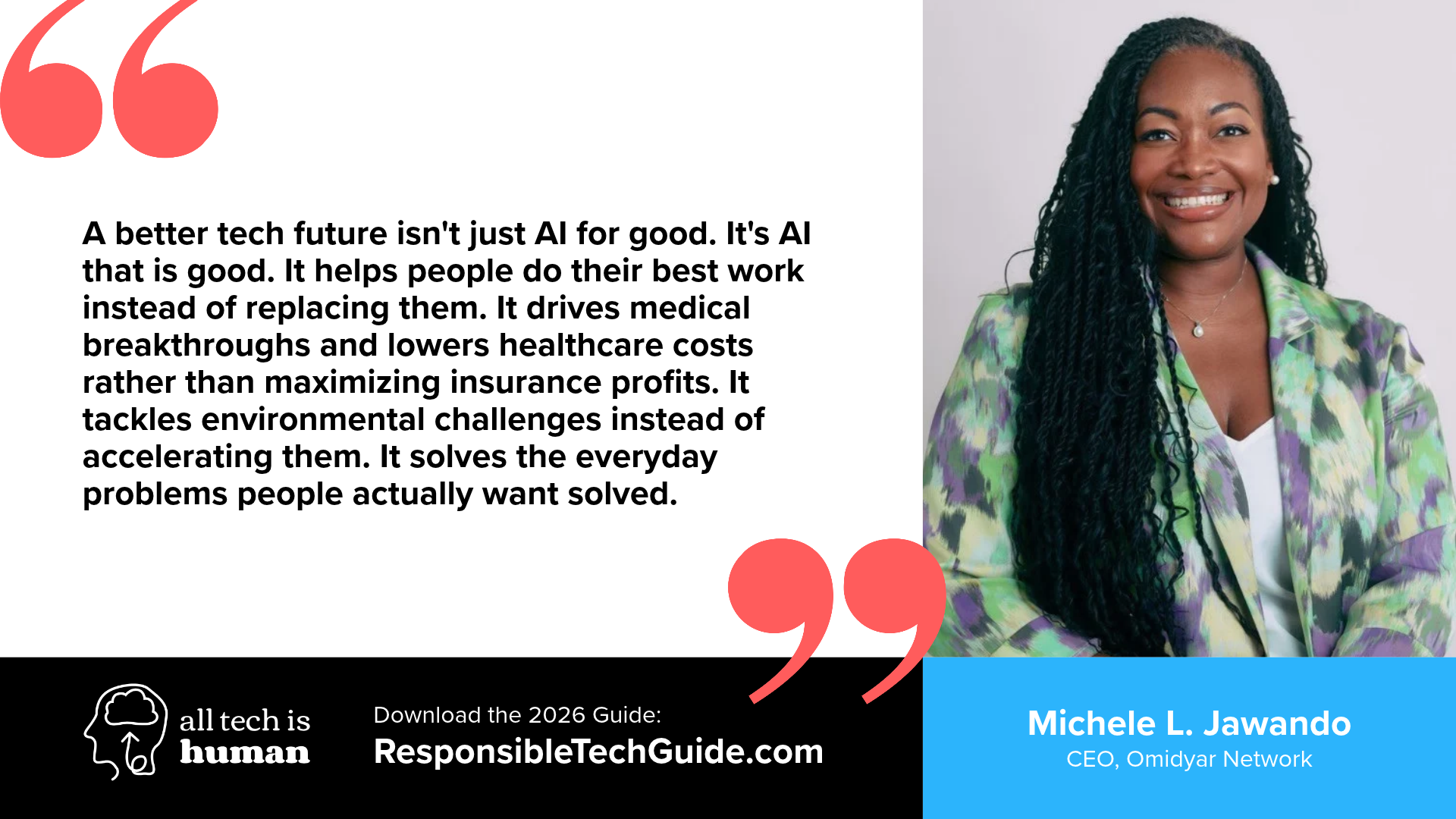
A better tech future isn't just AI for good. It's AI that is good. It helps people do their best work instead of replacing them. It drives medical breakthroughs and lowers healthcare costs rather than maximizing insurance profits. It tackles environmental challenges instead of accelerating them. It solves the everyday problems people actually want solved.
That's what we're building at Omidyar Network. When future generations look back on this moment, I want them to see more than better technology. I want them to see how it happened: people from all backgrounds organized, asked hard questions, and built solutions for their communities, and sectors came together to make those solutions last.
That's the blueprint I want to leave them for whatever comes next.
Learn more about Omidiyar Network here. Want more perspectives like this? Read the full Responsible Tech Guide, where this interview was profiled.