Katie Harbath on Raising Your Hand for Problems No One Owns
Part of our Responsible Tech Voices series, featuring leaders from All Tech Is Human’s 2026 Responsible Tech Guide.
Katie Harbath started in digital politics just as campaigns were discovering the Internet, then spent a decade at Facebook leading its work with governments and elections around the world. Today, as CEO of Anchor Change and author of Disrupting Politics, she works in the gaps between technology, policy, and democracy, where the hardest problems tend to live.

How did you get here?
My career has unfolded at the intersection of technology, politics, and democracy. I started in digital politics just as campaigns were beginning to embrace the internet, eventually joining Facebook in 2011, where I spent a decade building and leading its work with governments, politicians, and elections around the world. I left in 2021 to found Anchor Change, and that 25-year journey—and the lessons I learned along the way—is the story I tell in my book, Disrupting Politics. My advice: don’t worry about constructing the perfect career path. Raise your hand for problems that don’t have obvious owners, stay curious, build relationships across disciplines, and get comfortable working where the answers aren’t clear yet.
What fields intersect in your work?
My work sits at the intersection of technology, politics, democracy, public policy, Trust & Safety, and increasingly AI. Much of my career has involved translating between these worlds—helping technologists understand political and societal realities, while helping policymakers understand how technology actually works. I’m particularly interested in the gaps between disciplines, because that’s often where the hardest problems emerge. Responsible technology requires people who can connect those perspectives, understand the tradeoffs, and turn ideas into solutions that can actually work in practice.
What has surprised you most along the way?
The biggest surprise has been how rarely the moments that felt most important at the time turned out to define my career. Some of my biggest disappointments—losing responsibilities, not getting a job I wanted, or realizing it was time to leave something I had spent years building—ultimately pushed me toward better opportunities. I’ve also been surprised by how valuable it is to have experience across different worlds. My background spans journalism, campaigns, technology, public policy, and entrepreneurship, and what once looked like an unconventional résumé has become one of my greatest strengths. Careers make much more sense looking backward than they do while you’re living them.
Why do those intersections matter?
The hardest Responsible Tech problems don’t fit neatly into one discipline. A policy that sounds good on paper may be impossible to implement technically; a product solution may create unintended political or societal consequences; and decisions that work in one country may fail completely in another. The future of Responsible Tech requires people who can see across those boundaries. We need engineers, policymakers, Trust & Safety professionals, researchers, civil society, and others working together—not just to identify risks, but to build solutions that are technically feasible, globally informed, and grounded in how people actually use technology.
What's one action you'd like to see?
I’d like each of us to be more intentional about how we use technology. We often talk about our tech future as something being built for us, but our everyday choices help shape it too. What platforms do we use? Who do we follow? What information do we consume, share, and reward with our attention? Do those choices reflect the values we say we want from our information environment? We have more agency than we sometimes realize. If we want technology that strengthens our communities, expands our understanding, and reflects our values, we should start by thinking consciously about how we use it ourselves.
What does a better tech future look like to you?
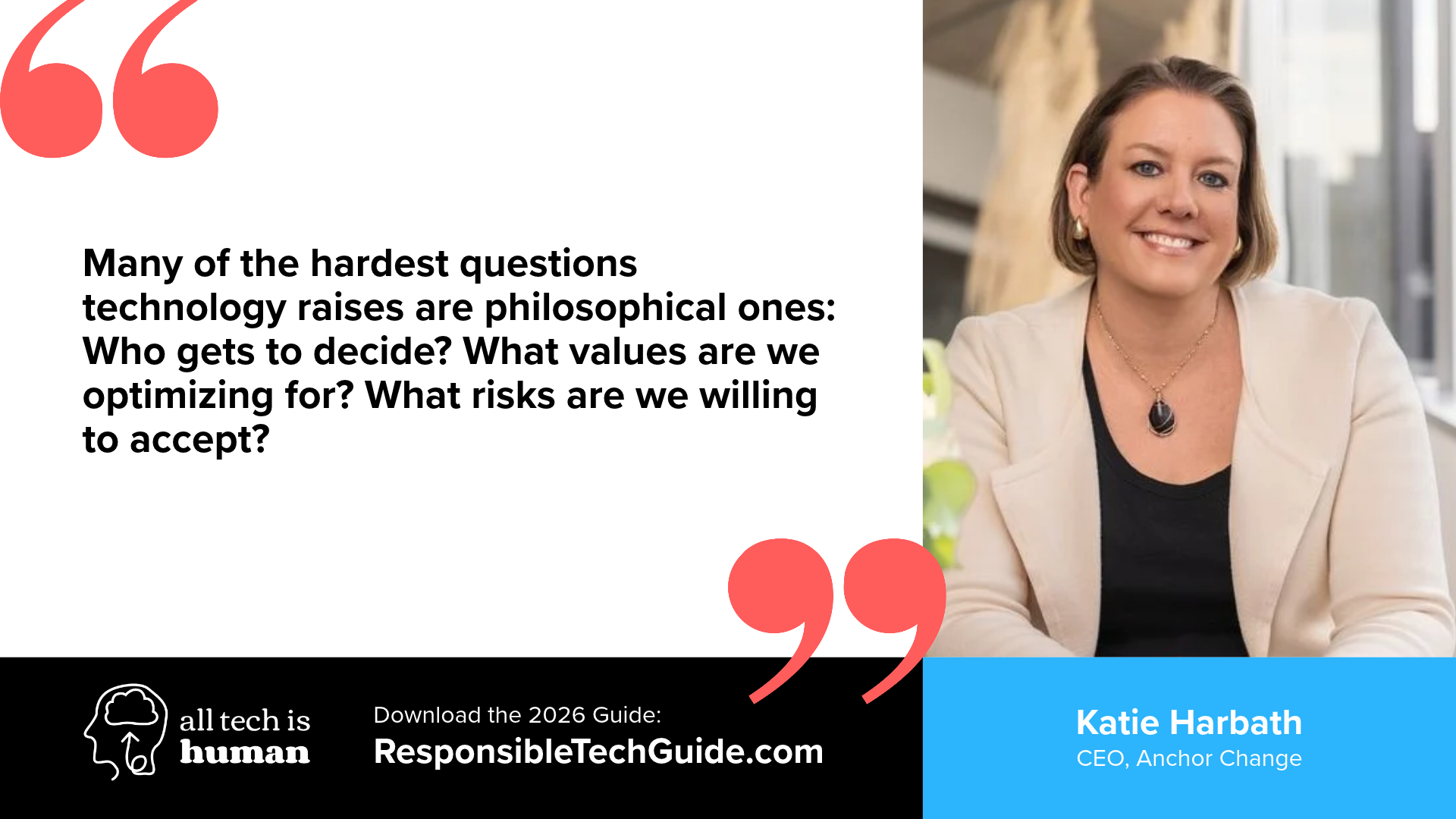
A better tech future isn’t one where we eliminate every harm or agree on every answer. It’s one where we get better at amplifying what technology makes possible while mitigating its harms—and where we’re willing to have more nuanced conversations about the trade-offs involved. Many of the hardest questions technology raises are philosophical ones: Who gets to decide? What values are we optimizing for? What risks are we willing to accept? Progress means resisting easy answers, being honest about those tensions, and continuing to adapt as technology and society evolve together.
Learn more about Anchor Change here. Want more perspectives like this? Read the full Responsible Tech Guide, where the interview was featured.