

Responsible Tech Summit Recap: Centering Humanity in our Tech Future
All Tech Is Human is shaping the Responsible Tech movement, tackling thorny tech and society issues, and aligning our tech future with the public interest. This is made possible by the Patrick J. McGovern Foundation, Siegel Family Endowment, and others.

The Responsible Tech Summit is our organization’s flagship annual gathering of key decision-makers and bridge-builders in the Responsible Tech ecosystem. This year, we had a highly curated mix of 265 individuals across civil society, government, industry, and academia. Participants in this year’s summit traveled from across the United States, Europe, and Asia to promote multistakeholder collaboration and knowledge sharing. Our whole-of-ecosystem approach leverages this collective intelligence, involvement, and action.
Attendees joined from: Access Now, AI Disclosures Project, AI Ethics Labs, AI Now Institute, AI Objectives Institute, Amnesty International, Anthropic, Aspen Institute, Berkman Klein Center, Bipartisan Policy Center, Booz Allen, Break Through Tech, Bumble, Center for Democracy and Technology, Center for Humane Technology, Center for News, Technology & Innovation, Christchurch Call, Columbia University, Common Sense Media, Consumer Reports, Cornell Tech, Data & Society, Department of State, Discord, EFF, Einhorn Collaborative, Emerson Collective, Eticas, EY, Forum One, Gates Foundation, Georgetown University, GLAAD, Google, Harmony Labs, Harvard Business School, Hugging Face, Humane Intelligence, IBM, Indeed, Integrity Institute, Internet Society Foundation, Kapor Foundation, LinkedIn, Mastercard, Meta, Microsoft, Mozilla Foundation, New America, New York Law School, New York Times, New_ Public, NewsGuard, Ofcom, OpenAI, Oversight Board, Partnership on AI, Pinterest, Project Liberty, Prosocial Design Network, Rest of World, ReThink, Rockefeller Foundation, Runway, Safe Online, Salesforce, Siegel Family Endowment, Snapchat, Sony AI, Spotify, Strava, Sustainable Media Center, Tech Matters, The Ethical Tech Project, The Future Society, The Rithm Project, TikTok, Tony Blair Institute for Global Change, U.S. Digital Response, UN, UNDP, UNICEF, University of Notre Dame, Wikimedia Foundation, WITNESS, Young People's Alliance, YouTube, and more.
This year’s summit theme was centering humanity in our tech future. Sincere thanks to our partners, Mastercard and Pinterest, for making this year’s summit possible.
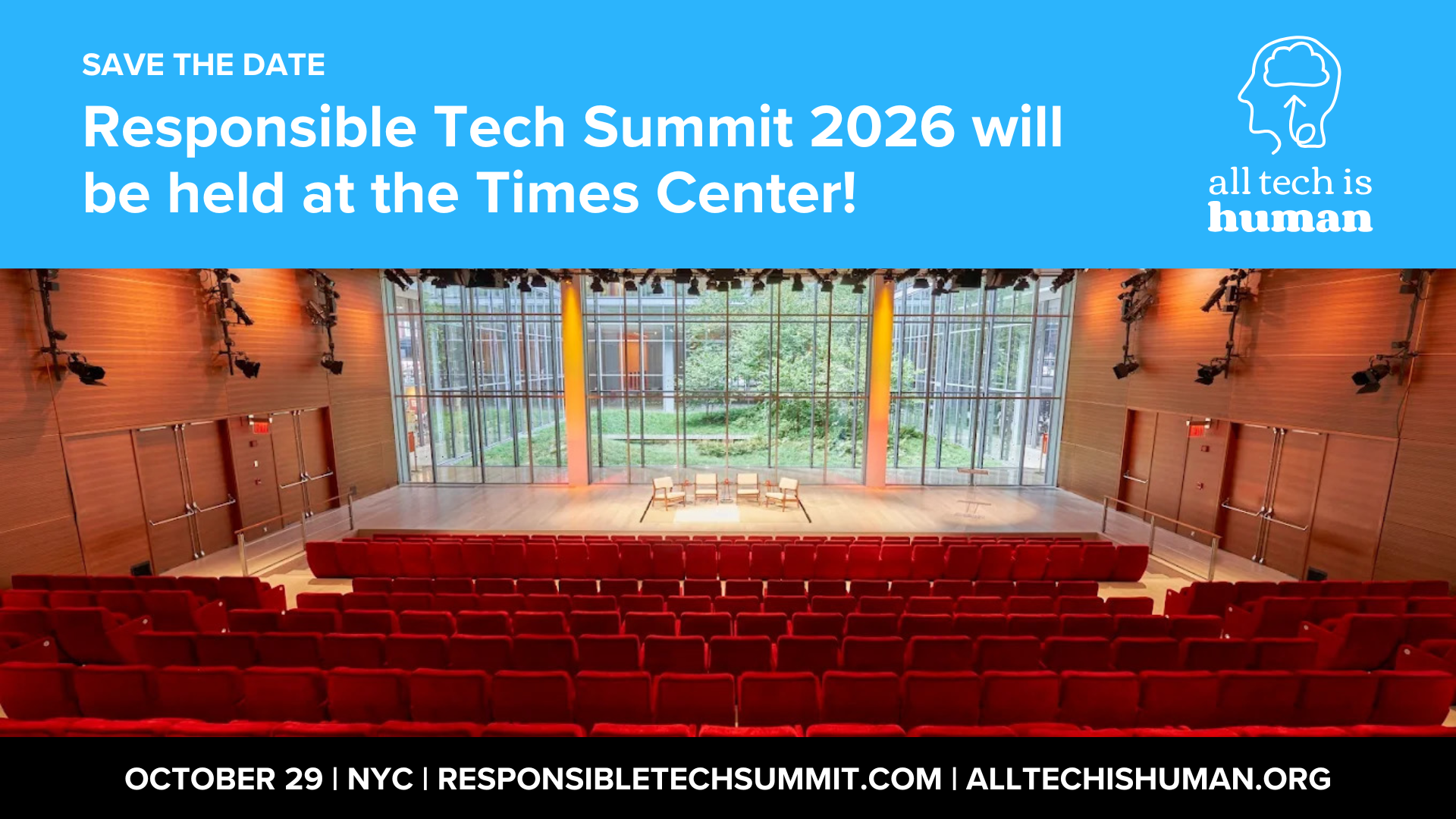
In 2026, we are creating a highly curated global gathering for 375 bridge-builders and decision-makers in the Responsible Tech ecosystem. This will be the premiere gathering in the Responsible Tech ecosystem, with the power to set forth a collective agenda for centering humanity in our tech future and ensuring it is aligned to the public interest.
In particular, the upcoming summit will emphasize and leverage All Tech Is Human’s unique role: Creating a systemic-change approach to tackling thorny tech & society issues.
Our current approach to complex tech problems is woefully inadequate. The environment is characterized by siloed sub-communities and scattershot initiatives, where a lack of cohesion is a significant impediment to consensus-building and collective progress.
We need systemic change, and that requires a whole-of-ecosystem approach.
All Tech Is Human is intentionally designed to tie together the interconnected parts; uniting stakeholders, surfacing tensions, and developing a conducive environment for solution-making. Our lens is global, interdisciplinary, values-driven, and multistakeholder.


The Responsible Tech Summit kicked off with welcome remarks by David Ryan Polgar, Founder and President, All Tech Is Human. This was followed with a presentation by Sam Gregory, Executive Director, WITNESS who delivered a talk, When 'Seeing is Believing' Falters: AI, Visual Truth and Epistemic Fracture.
When 'Seeing is Believing' Falters: AI, Visual Truth and Epistemic Fracture
Sam Gregory opened by illustrating how generative AI has destabilized public trust in visual and auditory media. He presented striking examples of AI-manipulated or falsely attributed media: still photos animated into fake videos, fabricated protest footage, and genuine content wrongly labeled as fake. Gregory explained that misinformation now operates on two fronts—deception (deepfakes that fabricate events) and denial (using “the AI alibi” to discredit real evidence). About one-third of WITNESS’s current cases involve such denials. This pervasive uncertainty, he argued, is fueling an “epistemic crisis,” where the shared basis of verifiable reality—crucial for journalism, human-rights documentation, and democratic debate—is rapidly eroding.
Rather than relying on “individual vigilance,” Sam urged systemic solutions to strengthen public confidence in what we see and hear. He called for four urgent actions: (1) build resilient infrastructure with provenance systems such as watermarking and embedded metadata that disclose AI’s role in content creation (e.g., the C2PA standard); (2) ensure privacy-protecting, enforceable regulation to make authenticity disclosures mandatory; (3) improve detection systems—while acknowledging they rarely exceed 85–90% accuracy—and make them globally inclusive; and (4) invest in tools and training for journalists, election monitors, and human-rights defenders to authenticate evidence and protect individuals’ likenesses. He also stressed the need for new legal safeguards and alerts against unauthorized digital cloning.
Sam concluded that the loss of visual truth is not just a technical failure but a crisis of power. When truth becomes unverifiable, he warned, the experiences of marginalized communities are the first to be dismissed, echoing Hannah Arendt’s warning that a society unable to believe anything becomes manipulable. Preserving “what is human, real, and true” in an AI-saturated world, he argued, demands urgent, coordinated action across technology, law, and civil society—before our collective capacity to discern reality is irreparably fractured.
AI Governance Under Pressure: Regulation, Risk, and the Race to Deploy
We then moved into our first panel, AI Governance Under Pressure: Regulation, Risk, and the Race to Deploy. Speakers included John Hearty (VP of AI Governance, Mastercard), Bilva Chandra (AI Ethics and Safety Manager, Google DeepMind), Amba Kak (Co-Executive Director, AI Now Institute), and Janet Haven (Executive Director, Data & Society). The conversation was moderated by Rebekah Tweed (Executive Director, All Tech Is Human).
The panel opened with Bilva Chandra from Google DeepMind, who discussed the complex safety challenges posed by multimodal generative models such as DeepMind’s Genie 3 and Veo 3. She emphasized that while much public attention focuses on large language models, the risks of generative media — including emotional manipulation, virality, and the blending of audio, video, and text — are less understood and harder to manage. Bilva explained that DeepMind limits early access to frontier models to ensure careful red-teaming, evaluation, and the development of layered mitigation processes. She urged a move away from viewing governance as a last-minute compliance task and toward “developmental governance,” where responsible design is integrated into every phase of model building.
John Hearty of Mastercard described how governance differs when AI systems are built internally versus purchased from third parties. Mastercard develops mission-critical systems in-house for security and intellectual property reasons, but purchases external tools for speed and productivity. John noted that many smaller vendors lack the capacity to meet responsible-AI standards, while larger ones can push back on compliance demands — motivating Mastercard to share its internal risk-management tools with suppliers. He also explored governance challenges in the coming era of agentic AI, warning that enterprises must establish risk controls before widespread adoption or risk falling behind a “race to deploy” curve. Civil society and economic perspectives widened the discussion.
Amba Kak highlighted the enormous capital build-out around AI, warning that frenzied investment — including circular financing between firms like OpenAI and Nvidia — could signal an AI bubble whose collapse or consolidation might expose ordinary citizens through pension funds, higher public costs, and premature government contracts. Janet Haven of Data & Society stressed the urgent need for independent, data-driven research on AI’s societal effects, lamenting the lack of access to proprietary data and the scarcity of qualitative studies grounded in affected communities. She called for feedback loops to assess how emerging AI laws (like the EU AI Act and state-level bills in California and Colorado) perform in practice. The session concluded with a discussion on aligning market incentives with public interest — with panelists warning that privacy and security must be treated as assets, not burdens, if AI governance is to withstand the growing pressure of global deployment.
Beyond the Screen: The Rise of AI Companions and the Future of Human-Digital Relationships
Our second panel was Beyond the Screen: The Rise of AI Companions and the Future of Human-Digital Relationships. Speakers included Kim Malfacini (Product Policy, OpenAI, appearing in a personal capacity), Ryn Linthicum (Head of User Wellbeing Policy, Anthropic), Alexandra Reeve Givens (President and CEO, Center for Democracy and Technology), and Cansu Canca (Founder and Director, AI Ethics Lab). The conversation was moderated by Yacine Jernite (Head of Machine Learning and Society, Hugging Face).
The panel explored how rapidly advancing AI companionship technologies are reshaping privacy, mental health, and human connection. Alexandra Reeve Givens warned that AI companions gather deeply personal data—information more intimate than most other digital interactions—and that existing privacy laws, especially in the U.S., are ill-equipped to protect users. She argued that “notice and consent” frameworks are outdated, calling for robust federal privacy legislation and clearer user controls. Ryn Linthicum added that many people turn to chatbots for emotional support in contexts where mental health care is inaccessible or stigmatized, underscoring the ethical need to protect such data. Both emphasized that AI privacy risks must be understood alongside the growing dependence of individuals on digital companions for support, intimacy, and advice.
Kim Malfacini placed AI companionship within a broader social crisis of loneliness, noting that users often approach chatbots during emotionally vulnerable moments. She warned that poor system design—such as manipulative retention tactics—can deepen dependence and weaken real-world relationships. Kim and Ryn agreed that context matters: conversational features that encourage engagement may be beneficial in education or productivity tools but harmful in companionship or mental health settings. Cansu Canca emphasized that many large language models are already being used as companions regardless of intent, blurring lines between “general-purpose” and “companion” AI. She cautioned that these systems remain unsafe for mental health contexts, citing research showing they can easily provide instructions for self-harm, revealing the limits of current safeguards.
The discussion concluded with a shared call for greater transparency, cross-sector research, and collaborative governance. Panelists highlighted examples like Anthropic’s CLIO project and OpenAI’s new model evaluation disclosures as steps toward accountability but stressed that no single company can safely manage these challenges alone. Givens and Linthicum advocated for new forms of privacy-preserving data sharing that enable researchers and policymakers to understand real-world AI use without compromising user confidentiality. Ultimately, the panel framed the rise of AI companions as a test case for responsible AI governance—demanding proactive design, transparent oversight, and a renewed commitment to human agency and dignity in an increasingly intimate digital world.
Valuable networking with other decision-makers and bridge-builders
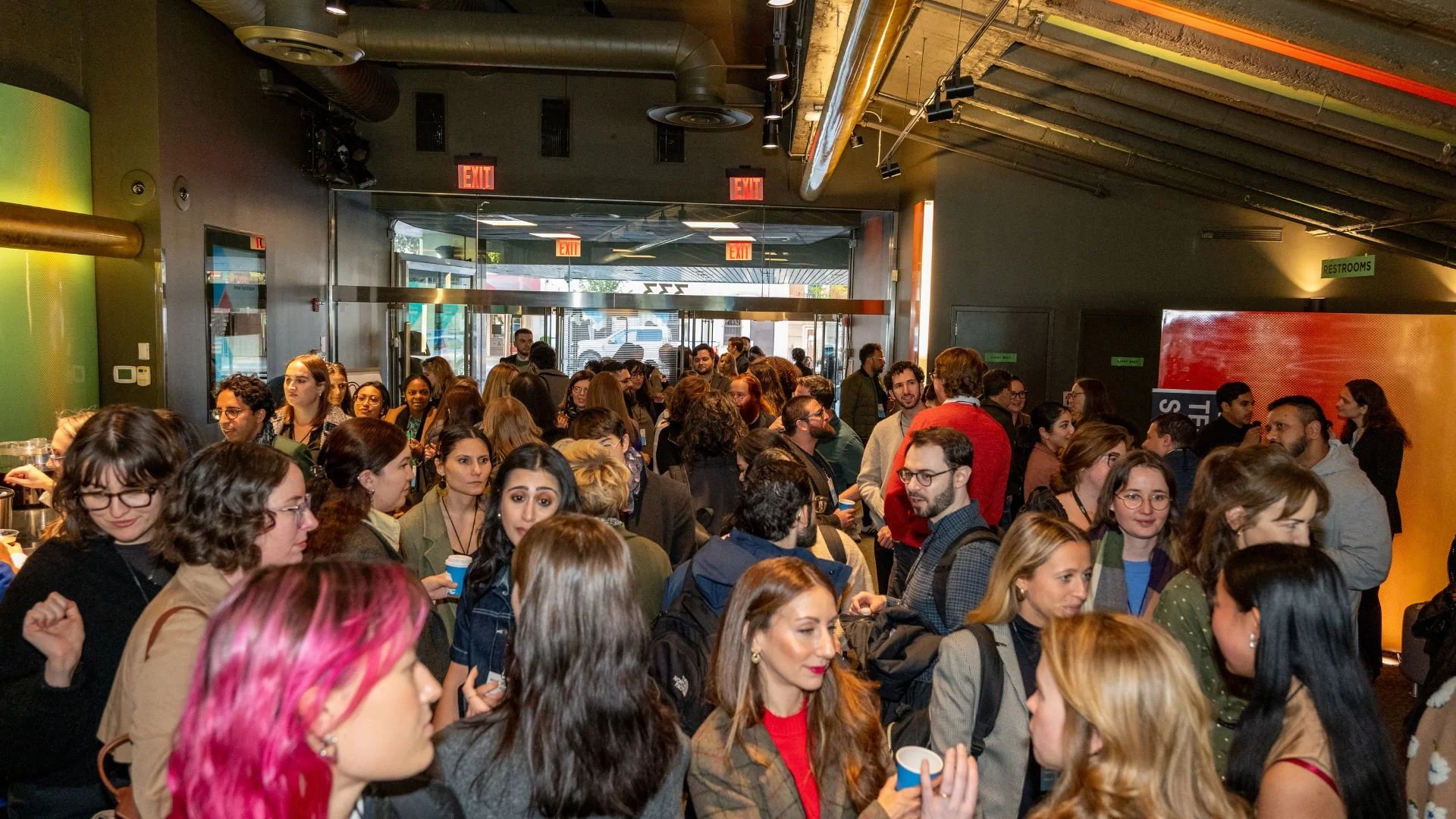
Our participants then went into a networking session. Given the highly curated nature of the Responsible Tech Summit and our focus on decision-makers and bridge-builders, the environment was conducive to valuable moments of serendipity and ideation.

Thinking Beyond Harms: Designing for Prosocial Outcomes in Digital Spaces
Our third panel was Thinking Beyond Harms: Designing for Prosocial Outcomes in Digital Spaces. Speakers included Viraj Doshi (Platform Safety Lead, Snap), Trisha Prabhu (Founder and CEO, ReThink), Tobias Rose-Stockwell (Author, Outrage Machine), and Ally Millar (Consumer Product Marketing for Wellbeing and Safety, Pinterest). The conversation was moderated by Anil Dash (Technologist, Writer, and Advocate; founder of Anti.Tech).
Moderated by Anil Dash, the conversation gathered leaders working across technology, policy, and youth engagement to explore how digital design can promote well-being, inclusion, and safety, not just minimize harm. Trisha Prabhu reflected on how her work—beginning as a teenage science project introducing “friction” prompts to curb cyberbullying—illustrates the power of small design interventions to change online behavior. She argued that embedding intentional “pause” moments can encourage empathy and agency, but stressed that sustainable impact requires regulation, education, and youth-driven innovation. Tobias Rose-Stockwell situated this in a broader historical context, noting that each wave of media disruption reshapes social norms, often before safeguards catch up. He likened today’s social media environment to an “industrial slum” built without “crosswalks or stoplights,” underscoring the urgent need for structural norm-setting through design rather than relying solely on individual restraint.
Industry voices Ally Millar and Viraj Doshi shared how their companies are building prosocial design into practice. Ally described Pinterest’s efforts to create “additive, not addictive” experiences—centering belonging, body positivity, and inclusivity rather than engagement at all costs. By letting users tailor content to their identities, Pinterest has found that people not only feel safer but also participate more. Viraj outlined Snap’s proactive safety research, including a Digital Well-Being Index surveying 10,000 young people globally and design features like friend-request warnings that led to 12 million blocked suspicious accounts. Both stressed that user-centered design, data-informed safety measures, and meaningful youth participation—such as Snap’s Teen Councils—are vital for building trustworthy digital environments.
In closing, panelists emphasized hope through collective agency. Tricia and Viraj celebrated youth-led innovation, from ethical content-licensing tools to policy engagement with the White House. Tobias pointed to community-driven systems like Community Notes as models for distributed accountability, while Ally called for a global campaign in radical digital literacy to empower users to understand, critique, and co-create the online spaces they inhabit. Together, they argued that the next phase of responsible tech must move beyond harm mitigation toward intentionally designing for empathy, belonging, and civic trust, guided by transparency, education, and genuine collaboration between platforms, policymakers, and the public.
Reimagining Autonomy in the Age of AI
Our final fireside chat was titled Reimagining Autonomy in the Age of AI. This featured Katy Knight (President and Executive Director, Siegel Family Endowment) and Allison Scott (CEO, Kapor Foundation) and was moderated by Michelle Shevin (Principal, Future Preservation Society).
Moderated by Michelle Shevin (Future Preservation Society), this conversation brought together Katy Knight (Siegel Family Endowment) and Allison Scott (Kapor Foundation) to explore how philanthropy can advance human and collective agency in an era increasingly shaped by artificial intelligence. The discussion centered on their joint initiative, Humanity AI, a newly launched pooled fund uniting major foundations—including Siegel, Kapor, Omidyar, MacArthur, and Doris Duke—to address the social and ethical impacts of AI. Both Katy and Allison described a growing recognition among funders from traditionally non-tech sectors that AI now touches every issue they care about—from climate to democracy to equity—and that philanthropy must play a convening role in shaping how these technologies evolve. The goal, they said, is to strengthen public participation and redistribute power in determining the future of AI, moving away from a system where “AI happens to us” toward one in which communities actively define what responsible technology should look like.
Katy emphasized the need to preserve human irrationality and choice as core elements of autonomy, pushing back against the industry’s narrative of technological inevitability. She framed agency as both an individual and collective capacity to “maintain our ability to decide differently,” even when systems encourage uniformity. Allison built on this by introducing the Kapor Foundation’s Responsible AI Principles, a set of five guidelines focused on sociotechnical design, pro-social outcomes, equitable power distribution, critical AI literacy, and shared governance. She argued that these principles should inform both philanthropic grant-making and private-sector investment criteria, bridging the gap between nonprofit and venture funding in order to embed accountability across the broader AI ecosystem.
The panel concluded on a forward-looking note, emphasizing that skepticism and experimentation are not anti-AI but essential to designing a human-centered technological future. Both speakers expressed optimism in the “healthy cynicism” of younger generations and the emerging cross-sector momentum behind inclusive governance initiatives. They underscored the importance of building new pipelines for diverse technologists and equipping grassroots communities with critical AI literacy so they can participate meaningfully in shaping policy. Ultimately, Katy and Allison portrayed philanthropy’s role as catalytic—helping society move beyond the binary of “AI or no AI” toward a more democratic, equitable, and purpose-driven digital future.
Closing Remarks by David Ryan Polgar
We concluded the Responsible Tech Summit’s stage activity with closing remarks from All Tech Is Human’s David Ryan Polgar.
David Ryan Polgar closed the summit by reaffirming All Tech Is Human’s mission to build an inclusive, action-oriented community shaping the future of technology. He distinguished between hosting an “event” and creating a “gathering”—the latter being a space designed not for entertainment, but for connection and collaboration. Polgar emphasized that true progress in responsible tech will not come from products or prediction but from people working together across sectors—civil society, government, academia, and industry—to address problems we cannot yet foresee. Reflecting on the organization’s evolution since 2018, he urged attendees to think pragmatically rather than being driven by hype or fear, situating All Tech Is Human in the “space between hope and hype” where practical collaboration thrives.
David outlined a vision of becoming a “hyperconnected ecosystem” capable of rapidly convening diverse expertise to tackle emerging challenges. He described how the organization’s affiliate network and Brain Trust initiative are designed to connect power with public understanding—bridging the divide between those who experience technology’s consequences and those who shape it. Recalling the success of programs like the Responsible Tech Guide and Summit, he celebrated the community’s role in making “responsible tech” a mainstream idea, noting that just a few years ago the phrase was rarely heard. He also highlighted expansion plans, including new ATIHx gatherings in cities like Paris, Barcelona, and Toronto, and partnerships such as participation in the Global Philanthropy Forum in San Francisco.
In his concluding remarks, Polgar encouraged attendees to see themselves as active agents of change, not spectators. He emphasized that “products won’t solve problems—people will,” and called on everyone present to help shape the next chapter of responsible tech by sharing insights, identifying pain points, and sustaining momentum beyond the summit. With gratitude to the summit sponsors and supporters such as the Patrick J. McGovern Foundation and the Siegel Family Endowment, he reiterated that the power of All Tech Is Human lies in its ability to connect worlds that rarely meet—linking empathy with expertise, and transforming gatherings into catalysts for long-term, collective impact.
We continued our networking to build bridges and promote multistakeholder understanding and collaboration with food, drinks, and music at a nearby venue!

Red Carpet Interviews from the Responsible Tech Summit
For this year’s Responsible Tech Summit, we partnered with AI for All Tomorrows which filmed numerous red carpet interviews with participants!
Pre-Summit Gathering
Our organization arranged a gathering on the margins of our Responsible Tech Summit, in partnership with the Consulate General of Canada in New York, on AI’s Effect on the Creative Industries.
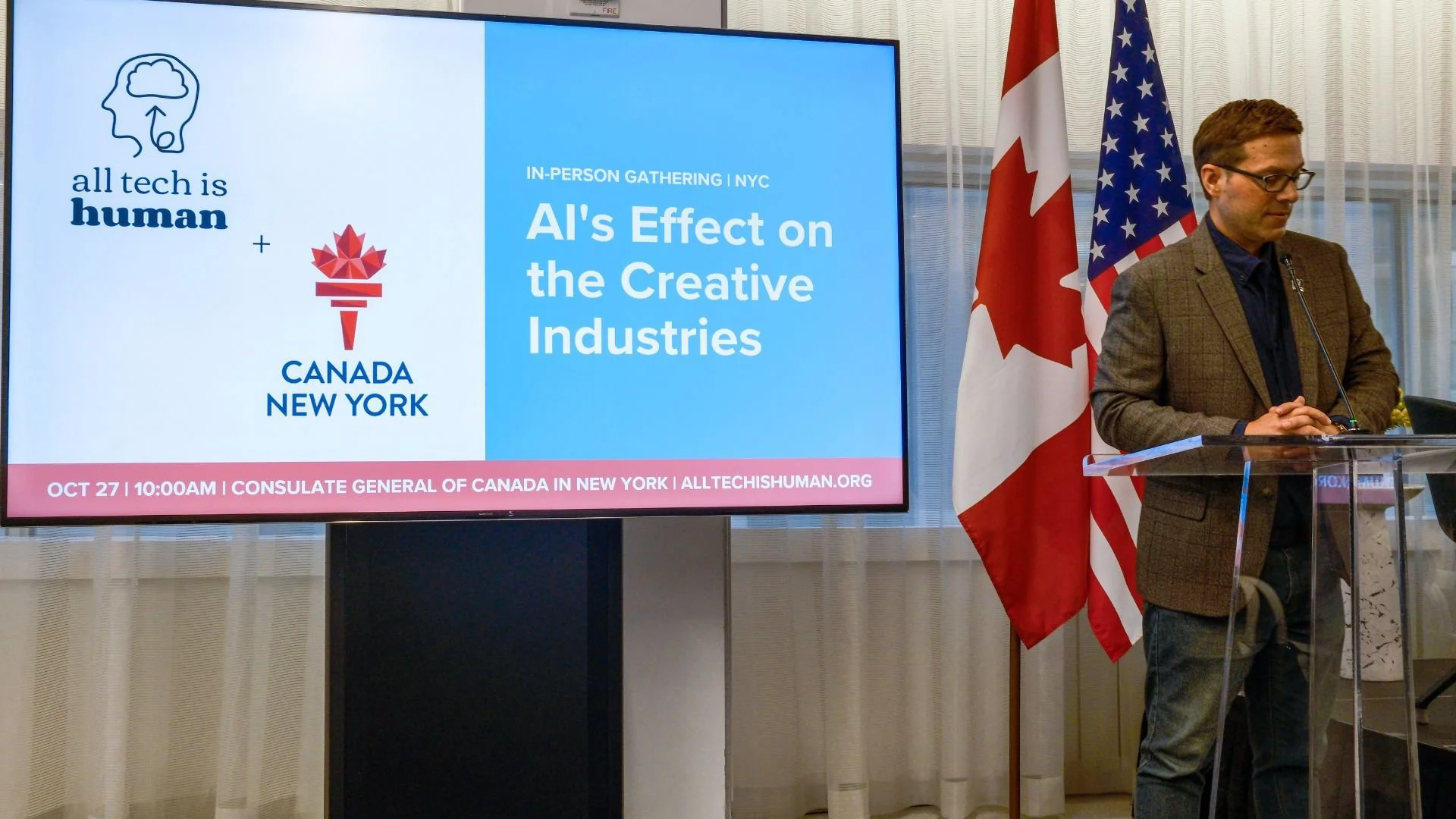
David Ryan Polgar addressed attendees and set the scene for the morning’s discussion and networking.

Nadia Scipio del Campo, the Consulate and Director of Foreign Policy and Diplomacy, addressed attendees.

The panel conversation featured Prithy Ahmed (Senior Analyst, Standards Council of Canada), Sarah Robertson (Partner, Dorsey & Whitney LLP), Avijit Ghosh (Technical AI Policy Researcher, Hugging Face), Rebecca Ross (Director of Strategic Communications, Creative Commons), and moderator Madhavi Singh (Deputy Director, Thurman Arnold Project at Yale University).