Meet Mozilla’s 2024 Rise25 Honorees

This year, we’ve joined our friends at Mozilla to honor responsible AI leaders in the second annual Rise25 Awards. Mozilla's 2024 Rise25 Awards honored 25 people working to create trustworthy AI across multiple disciplines. This year’s categories include Advocates, Artists, Builders, Change Agents, and Entrepreneurs.
The Categories
Advocates: These are the policymakers, activists and thinkers ensuring AI is developed ethically, inclusively and transparently. This category also includes those who are adept at translating complex AI concepts for the broader public — including journalists, content creators and cultural commentators. They champion digital rights and accessible AI, striving to make AI a force for societal good.
Artists: Their work provokes thought and offers fresh perspectives on AI through storytelling across various mediums. Their projects challenge perceptions and show how AI can amplify human creativity. Some also use their craft to challenge the current state of AI and engage in conversations about ensuring technology is applied fairly and equitably.
Builders: They’re the architects of trustworthy AI, including engineers and data scientists dedicated to the principles of open source, open data and open science. They focus on technical proficiency and responsible and ethical construction. Their work ensures AI is secure, accessible and reliable, aiming to create tools that empower and advance society.
Change Agents: Challengers lead the way in diversifying AI, bringing varied community voices into tech. They focus on inclusivity in AI development, ensuring technology serves and represents everyone, especially those historically excluded from the tech narrative. They are community leaders, corporate leaders, activists and outside-the-box thinkers finding ways to amplify the impacts of AI for marginalized communities. Their work fosters an AI environment of equality and empowerment.
Entrepreneurs: These daring individuals are transforming imaginative ideas into reality. They’re crafting businesses and solutions with AI to meet societal needs, improve everyday life and forge new technological paths. They embody innovation, steering startups and projects with a commitment to ethical standards, inclusiveness and enhancing human welfare through technology.
Honorees in Action
How do we evaluate, particularly scientifically evaluate, AI systems and their capabilities? This was the question explored in a recent All Tech Is Human livestream with Rise25 honorees Stella Biderman and Divya Siddarth. This included the design of benchmark data sets, metrics, open-sourcing, and red teaming exercises.
They discussed assumptions, mistakes, or intentional obfuscation during these processes leading to potentially unreliable, unpredictable, and potentially harmful models. The panel also explored how open and closed-sourced data impacts these issues, rendering it easier or more difficult to evaluate models. The entire conversation was contextualized with a sociotechnical lens, with a focus on how scientific questions like these are critical to ensuring safe, robust, and trustworthy AI models, and how we can support public technical literacy. Watch the full livestream here.
You can also find honorees Audrey Tang, Sinead Bovell, and Cansu Canca profiled in our new Responsible Tech Guide, with Sinead having also appeared on stage in our recent Responsible Tech Summit.
Who is fostering a more trustworthy AI future in 2024? Dive into the 2024 honorees’ backgrounds below.

Audrey Tang
Advocate
Audrey Tang, a TIME100 Most Influential People in AI honoree, was Taiwan’s first digital minister and the world’s first nonbinary cabinet minister.
As a child, Tang practiced Taoism to moderate all strong emotions to survive a cardiac condition. After attending 10 educational institutions in 10 years, she left formal schooling to pursue self-education at age 14. In her 20s, Tang rose to prominence as a leader in free and open-source software, revitalizing the Haskell and Perl programming languages.
During her 30s, Tang played a crucial role in shaping g0v (gov-zero), one of the most prominent civic tech movements worldwide. In 2014, she helped broadcast the demands of Sunflower Movement activists, and worked to resolve conflicts during a three-week occupation of Taiwan’s Legislature. Tang became a reverse mentor to the minister in charge of digital participation, before holding the role from 2016 to 2024 during the Tsai Ing-wen administration.
Tang helped develop participatory democracy platforms such as vTaiwan and Join, bringing civic innovation into the public sector through initiatives like the Presidential Hackathon and Ideathon.
Other accomplishments for Tang include shaping Taiwan’s internationally acclaimed COVID-19 response, as well as safeguarding the country’s 2024 presidential and legislative elections from cyber interference.
Amb. Philip Thigo
Advocate
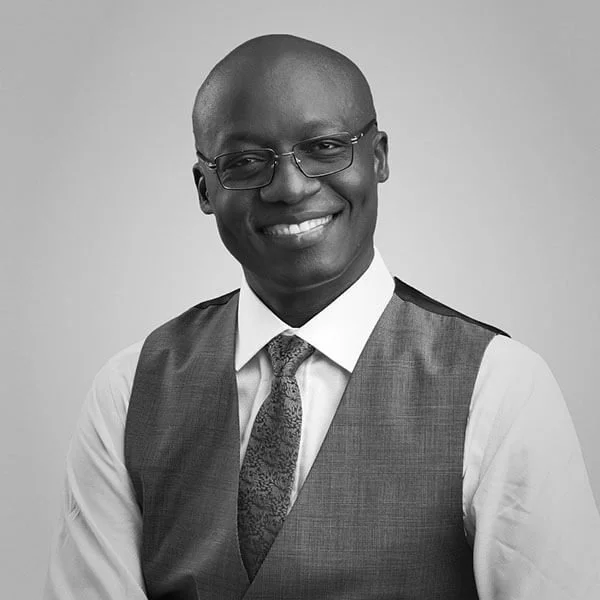
Ambassador Philip Thigo, MBS, is an award-winning technology, public policy expert and thought leader who has significantly contributed to leveraging technology for social and economic development across Africa.
Currently, Ambassador Thigo serves as the Special Envoy on Technology for the Republic of Kenya and is the Founding Director for Africa at the Thunderbird School of Global Management. In 2023, he was appointed by the United Nations Secretary-General to the UN High-Level Advisory Board on Artificial Intelligence (HLAB). He also sits on numerous prestigious local and international boards and global networks that advance the use of technology for global goals.
Early in his career, Ambassador Thigo co-founded the Budget Tracking Tool and Huduma, initiatives aimed at promoting government transparency and accountability. He also co-created Uchaguzi with Ushahidi, a platform designed to monitor elections and enhance citizen engagement.
In recognition of his efforts, he was acknowledged by Apolitical in 2018 as one of the World's 100 Most Influential People in Digital Government. In 2023, AfricaCom named him among Africa's Top 100 Most Influential Leaders in Technology and Telecommunications.
On December 12, 2023, during Kenya's 60th Independence Day Anniversary, he was awarded a Presidential Commendation—the Moran of the Order of the Burning Spear (M.B.S)—for his distinguished service to the country.

Sinéad Bovell
Artist
Sinead Bovell is a futurist and the founder of WAYE, an organization that prepares youth for a future with advanced technologies, with a focus on non-traditional and minority markets.
Emerging as one of the most sought-after voices shaping the future, tens of thousands tune into Sinead's platforms every day to hear her insights on technology and the future. Sinead is an 11-time United Nations speaker. She has delivered formal addresses to presidents, royalty, and Fortune 500 leaders on topics ranging from cybersecurity to artificial intelligence and is known for her engaging future forecasts tackling the ethical challenges of emerging technologies with a relatable approach.
A regular tech commentator for CNN, talk shows, and morning shows, Sinead has been dubbed the "A.I. educator for the non-nerds" by Vogue Magazine and named one AfroTech’s Top 50 Voices shaping the future. To date, she has educated over 300,000 young entrepreneurs on the future of technology.

Linda Dounia Rebeiz
Artist
Linda Dounia Rebeiz is an artist and designer who investigates the philosophical and environmental implications of technocapitalism. Her work mediates her memories and context as alternative truths and evidence of excluded ways of being and doing using generative technologies, namely Artificial Intelligence and Creative Coding. In 2023, Linda was recognized on the TIME100 list of most influential people in AI for her work on speculative archiving — building AI models that help us remember what is lost. She is currently based in Dakar, where she is from.
Manuel Sainsily
Artist
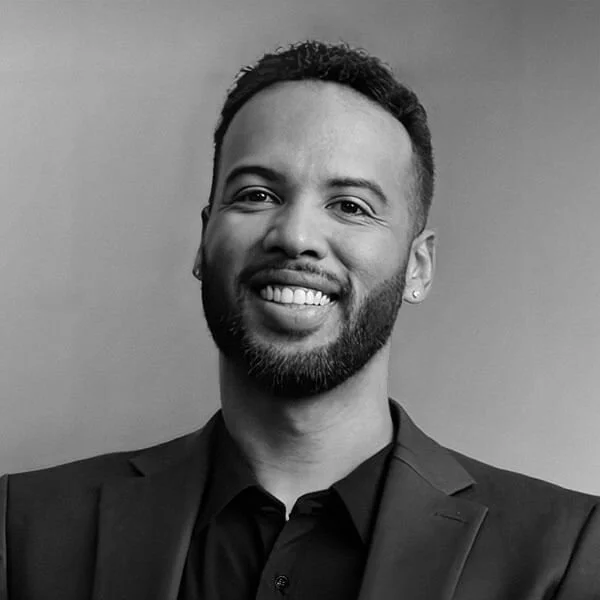
Manuel Sainsily is a TEDx Speaker, and XR Instructor at McGill University & UMass Boston. Born in Guadeloupe, and Canadian citizen based in Montreal where he completed his Master of Science in Computer Sciences, he is a trilingual public speaker, designer, and educator with over 15 years of experience who champions the responsible use and understanding of artificial intelligence. From delivering a Masterclass on AI Ethics and speaking at worldwide tech, film, and gaming conferences, to being celebrated by NVIDIA, Mozilla Rise25 & SkillShare, and producing art exhibitions with Meta, OpenAI & VIFFest, Manuel amplifies the conversation around cultural preservation and emerging technologies such as Spatial Computing, AI, Real-Time 3D, Haptics, and BCI through powerful keynotes and curated events.

Stella Biderman
Builder
Stella Biderman is the Executive Director of EleutherAI and a leading figure in the open source AI movement. Her work creating models like GPT-Neo, GPT-NeoX-20B, BLOOM, VQGAN-CLIP, and OpenFold paved the way for the current boom in open source generative AI. In addition to releasing models, Stella’s team builds and releases key pieces of the language modeling pipeline that are often kept proprietary including datasets, training libraries, and evaluation libraries. Her latest models, called Pythia, set a new bar for reproducibility and empowering low-compute users to do research in interpretability, learning dynamics, and more by releasing over 140 checkpoints saved throughout training.

Roberto Di Cosmo
Builder
After teaching at École Normale Supérieure in Paris, Roberto Di Cosmo became a full professor of Computer Science at University Paris Cité. He is currently on leave at Inria, where he co-founded leads Software Heritage, the library of source code dedicated to collecting, preserving, and sharing all publicly available software source code, in partnership with UNESCO.
Roberto’s research spans logical systems, functional and parallel programming, and software engineering. A long-time advocate for Free and Open Source Software, he founded the Free Software thematic group of Systematic in 2007, directed the European project Mancoosi to improve package managers for large software collections, and established Irill, a research structure focused on Free and Open-Source Software quality.
He also leads the Software college of the French committee for Open Science, working to make software development a fully recognized academic activity.

Aaron Gokaslan
Builder
Aaron Gokaslan is a PhD student at Cornell Tech, focusing on data, systems, and applications for generative models under the guidance of Volodymyr Kuleshov. He collaborates closely with Noah Snavely, Sasha Rush, and James Grimmelmann. His research aims to keep generative model development open, accessible, and reproducible. Aaron has also published work on embodied AI, graphics, robotics, and 3D vision. He has worked on widely-used open source projects including OpenWebText, ROOTS, CommonCatalog, BLOOM, DBRX, TADNE, and Caduceus, which have collectively been downloaded by millions. His contributions have earned him a Community Contributor Award at PyTorchCon from the Linux Foundation for maintaining libraries like pybind11, habitat-sim, and Pytorch. Aaron serves on the advisory boards of Fidutam and Encode Justice and also advocates for open-source AI as legislation begins to regulate the field.

Raesetje Sefala
Builder
Raesetje Sefala is an AI Research Fellow at the Distributed AI Research (DAIR) institute. Her research focuses on creating ground truth datasets and using machine learning and other computational social science techniques to study the effects of spatial apartheid in South Africa, post-Apartheid. Her previous work involved partnering with various stakeholders and using machine learning techniques to study poverty and traffic safety in the urban parts of Nigeria and Jakarta, respectively. She is also the co-founder of ACVSS, an annual computer vision summer school that aims to unite African students with leading experts, teaching them fundamental principles, ethical considerations, and cutting-edge techniques.

Kathleen Siminyu
Builder
Kathleen Siminyu is a Mozilla Common Voice fellow alum and a Natural Language Processing researcher at the DAIR Institute. She focuses her research on African languages as a form of activism and from a desire to see these languages better represented on digital platforms. Kathleen is a former Mozilla Common Voice fellow and has been involved in various efforts to build language datasets. Her experiences in building open datasets has inspired a desire to explore data governance and licensing models that can ensure maximum benefit is returned to the communities of dataset builders and subjects.
Kathleen also works with African AI communities to enable ecosystem capacity building and research relevant to Africa. She continues to organize with communities as part of the Deep Learning Indaba, where she is a trustee and the Masakhane Research Foundation, where she is a director.
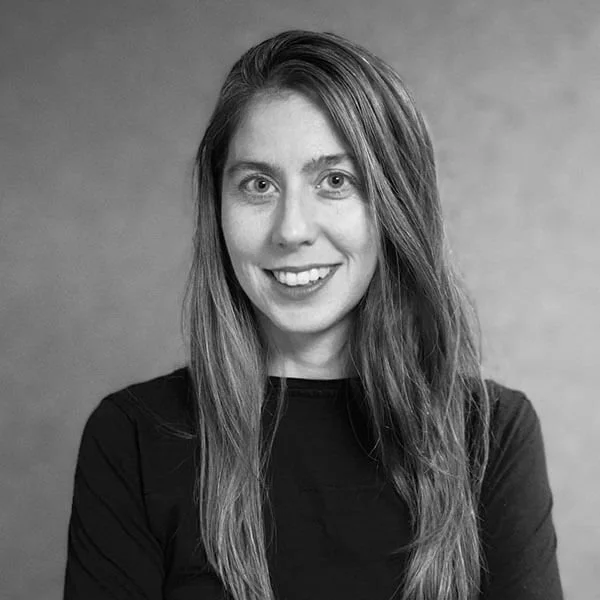
Cansu Canca
Change Agent
Cansu Canca is a philosopher and the Founder+Director of AI Ethics Lab, one of the first initiatives focusing exclusively on advising practitioners and conducting multidisciplinary research on AI ethics. She is also the Director of Responsible AI Practice at the Institute for Experiential AI and a Research Associate Professor in Philosophy at Northeastern University. With her team of computer scientists and philosophers, she provides hands-on, research based consulting in integrating ethics into AI innovation and implementing responsible AI strategy for organizations.
Cansu has a Ph.D. in philosophy specializing in applied ethics. She serves as an ethics expert in various ethics, advisory, and editorial boards and to Fortune 500 companies. She works with World Economic Forum and with the UN and the INTERPOL in developing guidelines for law enforcement, investors, and companies for responsible AI innovation.
Cansu primarily works on ethics of technology, having previously worked extensively on ethics and health as a faculty member at the University of Hong Kong, and an ethics researcher at the Harvard Law School, Harvard School of Public Health, National University of Singapore, Osaka University, and the WHO.

Angela Lungati
Change Agent
Angela Lungati is a technologist, community builder, and open-source software advocate passionate about building and using appropriate technology tools to impact the lives of marginalized groups. She has over ten years of experience in software development, global community engagement, and non-profit organizational management.
She is the Executive Director at Ushahidi, a global non-profit technology company that helps communities quickly collect and share information that enables them to raise voices, inform decisions and influence change.
She sits on the Board of Directors for Creative Commons and Humanitarian OpenStreetMap Team. She’s also a member of the World Economic Forum’s Global Futures Council on Data Equity, and co-founder of AkiraChix, a non-profit organization that nurtures generations of women who use technology to develop innovations and solutions for Africa. She was also recently named a World Economic Forum Young Global Leader in 2024.

Elaine O. Nsoesie
Change Agent
Elaine O. Nsoesie is an Associate Professor at Boston University School of Public Health. She uses data and technology to advance global health equity. She led the Racial Data Tracker project at Boston University’s Center for Antiracist Research which aimed to collect, analyze, and disseminate publicly available racial data that points to the structural nature of racism. She also served as a program lead and a senior advisor to the Artificial Intelligence/Machine Learning Consortium to Advance Health Equity and Researcher Diversity (AIM-AHEAD) program at the National Institutes of Health. She is the founder of Rethe – an initiative that aims to increase representation of Africans in scientific research publications. She is on the advisory boards of Data Science Africa and Data Scientists Network – organizations working to build data science capacity in Africa.

Desmond Patton
Change Agent
Desmond Patton studies the impact social media has on well-being, mental health, trauma, violence and grief for youth and adults of color. He leverages social work thinking, data science, qualitative methods, and community partnerships to develop strategies to support digital grief and trauma and reduce on and offline gun-related violence.
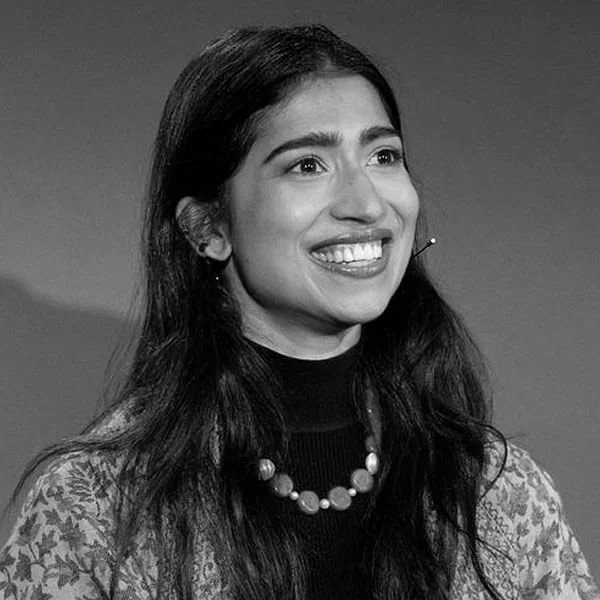
Divya Siddarth
Change Agent
Divya Siddarth is the executive director and co-founder of the Collective Intelligence Project, which is developing and applying new governance models for artificial intelligence. She believes that transformative technologies will only advance the “public good” if we creatively involve the public, and that collective intelligence is a powerful tool for making AI better. To that end, Collective Intelligence has worked with partners such as the Taiwanese Digital Ministry, the UK AI Safety Institute, ITS Rio, OpenAI, Anthropic, and Creative Commons on designing “alignment assemblies” – early experiments in demonstrating how the broader public can effectively co-create and improve powerful AI models.
Before founding CIP, Divya was Microsoft’s Office of the CTO’s political economist and social technologist. She graduated from Stanford with a B.S. in Computational Decision Analysis, and is pursuing a DPhil at the Oxford Internet Institute.
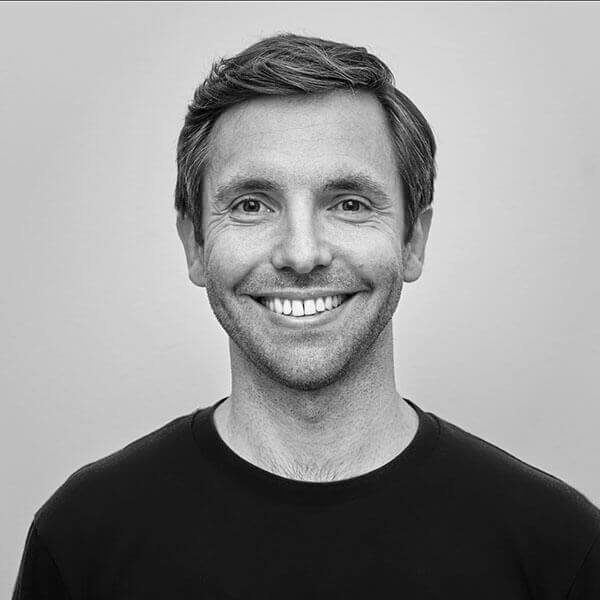
Daniel Beutel
Entrepreneur
Daniel Beutel is one of the creators of Flower, an open-source framework for training AI on distributed data using federated learning. Flower is one of the leading federated AI ecosystems with a large and growing community and users at many Fortune 500 companies and most top universities worldwide. Daniel previously held roles as Head of AI and CTO and has considerable experience in running and scaling engineering teams. He is a CS PhD candidate at the University of Cambridge and co-founder of Flower Labs, a startup backed by Y Combinator, First Spark Ventures, Felicis Ventures, and Mozilla Ventures (among others).
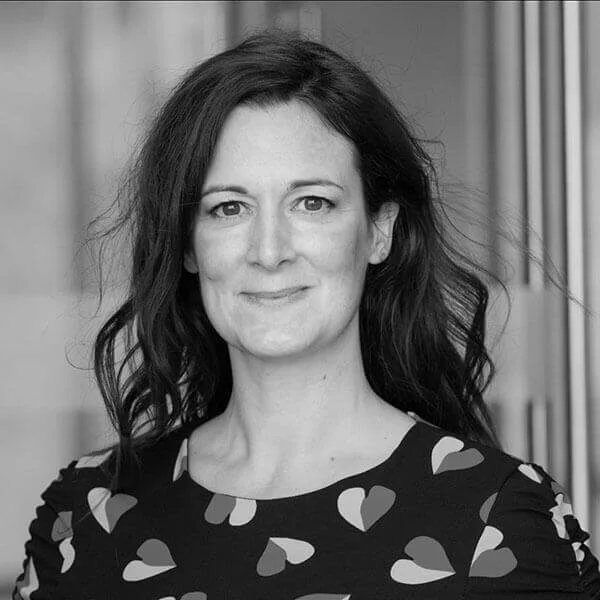
Gemma Galdon-Clavell
Entrepreneur
Dr. Gemma Galdon-Clavell is a pioneer and global force in AI safety and auditing, ensuring that machine learning tools truly serve society. She is the founder and CEO of Eticas.ai, a venture-backed organization that identifies, measures and corrects algorithmic vulnerabilities, bias and inefficiencies in predictive and LLM tools. Eticas’ software, the ITACA platform, is the first solution to automate impact analysis and monitoring, ensuring that AI systems are high performing and safe, explainable, fair and trustworthy.
Dr. Galdon-Clavell’s impactful work – and passion for disrupting the status quo – earned her recognition as a Hispanic Star Awardee at the United Nations in 2023, an Ashoka Fellow in 2020 and a finalist at the EU Prize for Women Innovators awarded by the European Commission in 2017. In 2023 the BBC acknowledged her as one of the “people changing the world” and in 2024 she was honored by Forbes Women as one of the “35 Leading Spanish Women in Technology”, praised as “a pioneer in algorithmic auditing software”.
Dr. Galdon-Clavell is an active advisor to international and regional institutions such as the United Nations (UN), the Organization for Economic Cooperation and Development (OECD), European Institute of Innovation and Technology (EIT) and the European Commission, among others. She is also a sought-after speaker, with recent engagements at high-level fora like the US-EU Trade and Technology Council (TTC), re:publica or TEDx. Her comments on AI developments have been captured in Wired, Business Insider, Forbes and Computer Weekly.

Peter Gault
Entrepreneur
Peter Gault is the Founder & Executive Director of the education nonprofit Quill.org. Quill’s AI-powered, open source literacy tools help 3rd-12th grade students become stronger writers and critical thinkers. Quill’s AI provides students with immediate feedback and coaching on their writing, enabling them to revise their work and quickly develop their skills. Teachers are provided with free access to our research-based curriculum, and our nonprofit, open source organization works with academic researchers to design and build its technology and curriculum. Quill has now impacted nine million students across the world, with students writing and receiving feedback on two billion sentences.
Quill is explicitly committed to building Responsible AI designed for students attending low-income schools. Quill has built over 300 AI models over the past five years by creating custom datasets representing diverse students and training fine-tuned models responsive to these students’ needs.
