Critics and Builders: Neha Shukla on Youth Power in the Age of AI
Part of our Responsible Tech Voices series, featuring leaders from All Tech Is Human’s 2026 Responsible Tech Guide.
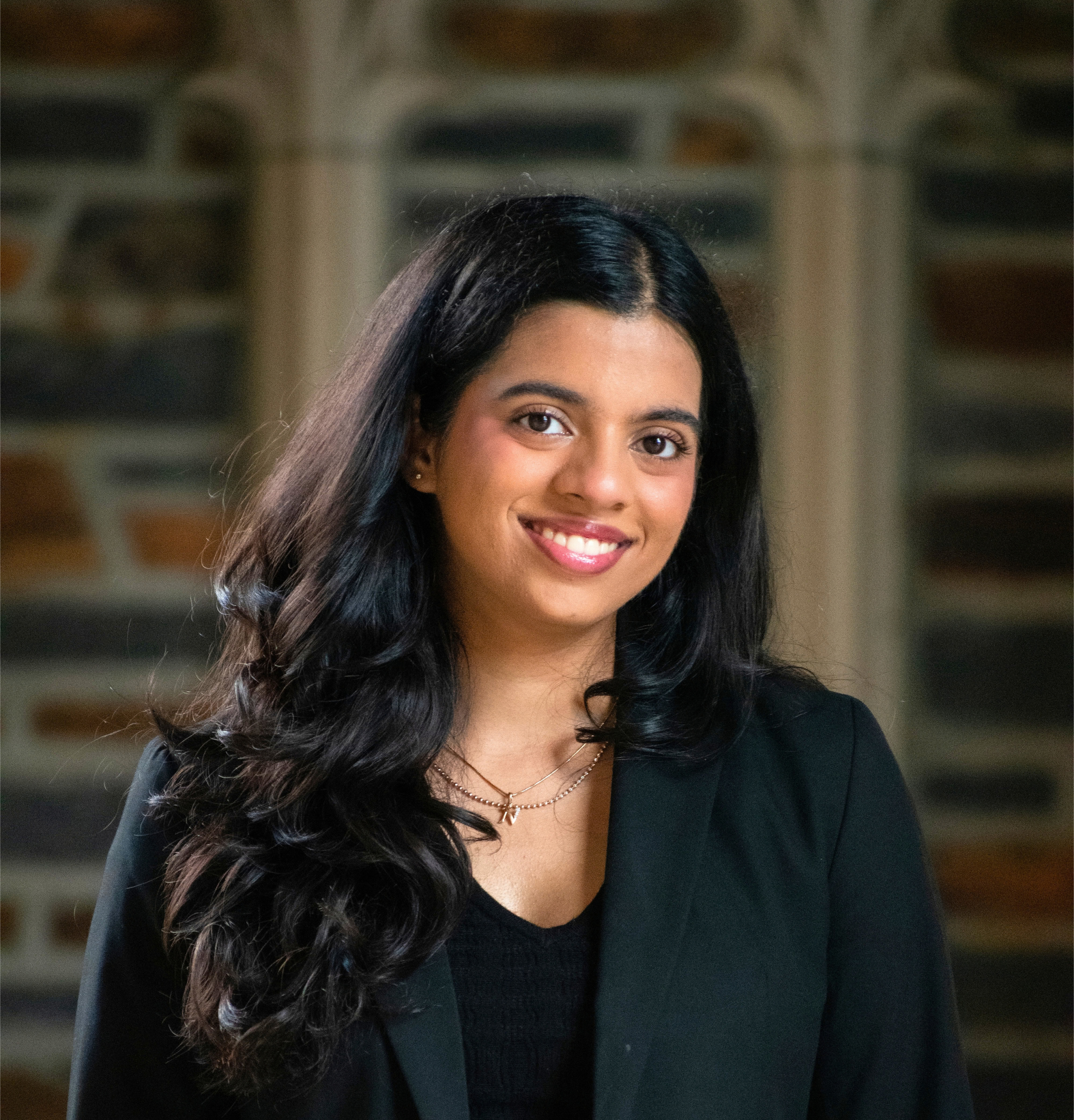
At fifteen, Neha Shukla taught herself to code and built a wearable social-distancing device to protect farm workers in her Pennsylvania hometown during the COVID-19 pandemic. What she saw in the boardrooms that followed led her to found Innovation For Everyone, a youth-led movement for tech justice where young people can be both critics and builders of technology's future.
How did you get here?
I grew up in a small farm town in Pennsylvania and with a love for serving my community and spent much of my teenage years in local activism. Seeing how the COVID-19 pandemic was ravaging my hometown in 2020, I taught myself to code in my makeshift bedroom lab and began building my first prototype of a wearable social-distancing device to keep my community, and especially farm workers, safe. As I continued engaging with the community and piloting the device, my story was picked up by the New York Times, and overnight, I found myself in boardrooms and pitch meetings with decision-makers and CEOs at just fifteen years old.
But what I saw in those rooms was that tech companies were continually prioritizing profit over the wellbeing and safety of young people. That inspired the launch of Innovation For Everyone as a youth-led movement for tech justice - where young people can be both critics and builders of a more equitable future of technology.
To date, we've been able to reach over 70,000 students across 35 countries mobilizing to bridge the AI ethics literacy gap and ensure that all youth, regardless of socioeconomic status, zip code, race, or gender, have the ability to think critically, form human relationships, and preserve our collective humanity in the age of AI. We've released research on AI child safety benchmarking LLMs and AI companions impacts on mental health, and are working to hold companies accountable for platform harms and drive tangible change. We've published two books - "Innovation For Everyone: Solving Real-World Problems with STEM" and "A Kids Book About AI" (Penguin Random House), and are releasing the AI Critical-Thinking Guide for educators this winter.
This journey has taken us from building a grassroots movement led by teenagers, to advising the World Economic Forum's first-ever entirely youth-led AI advisory body, to speaking to world leaders at the United Nations General Assembly, to being mentioned by CNN, Forbes, the Financial Times, Harper's Bazaar, and ELLE. And we're just getting started!
What fields intersect in your work?
My work focuses on the intersection of child safety, AI benchmarking, collective action & grassroots organizing, and youth power. As a senior at Duke, I'm studying computer science and sociology, and I believe this combination of the quantitative and social sciences is so beyond critical in building an informed perspective and giving you the tools to comb through these very thorny sociotechnical questions.
What's one action you'd like to see?
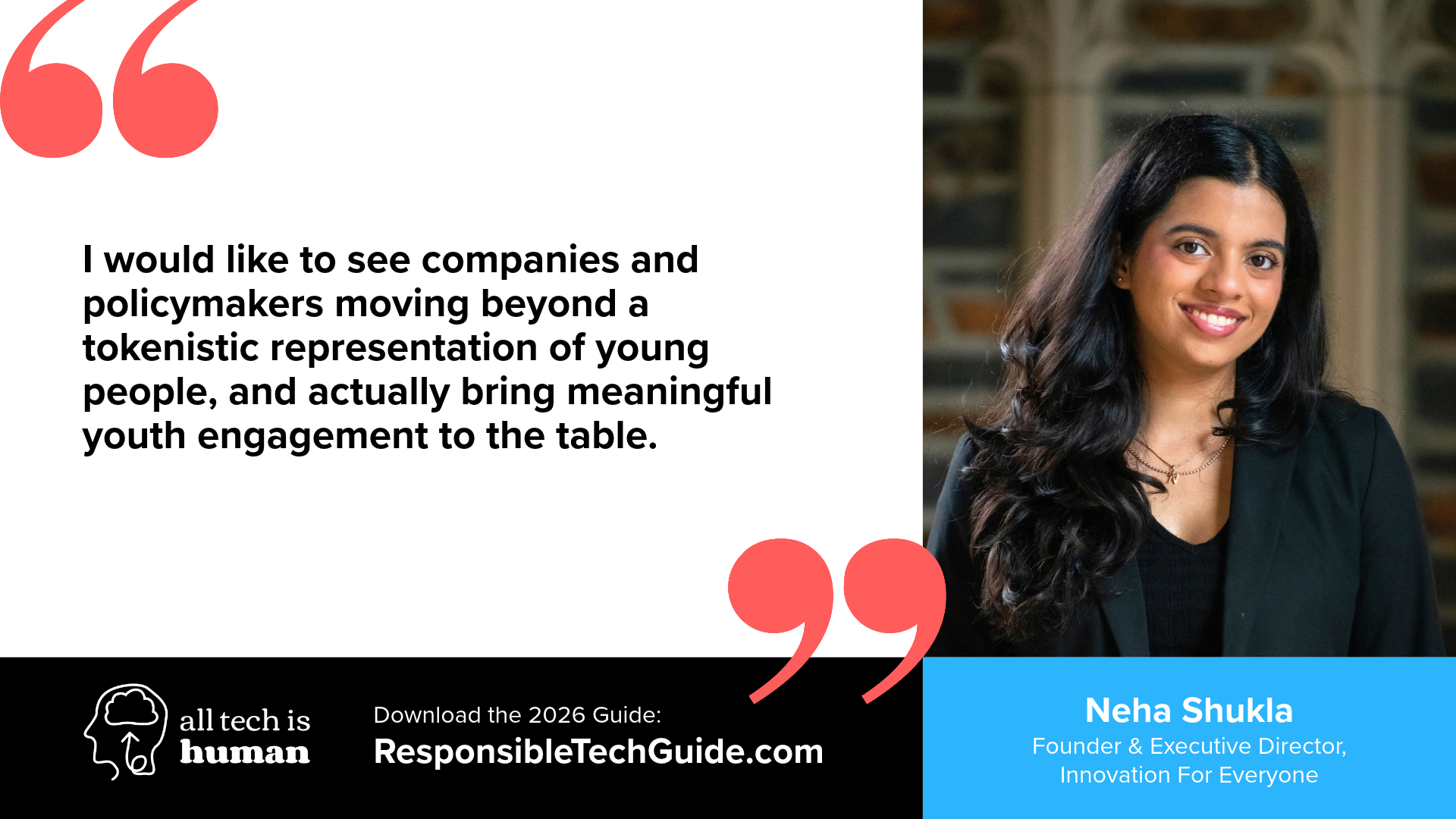
I would like to see companies and policymakers moving beyond a tokenistic representation of young people, and actually bring meaningful youth engagement to the table. To me, this looks like constructing AI child safety benchmarks and guardrails informed by the lived experience and perspective of youth, building AI policy and regulations with young representatives with real voting power, and engaging the masses of young people experiencing frontline harms with the resources to navigate this landscape and raise their voices to rewrite the narrative of what this future could look like.
What does a better tech future look like to you?
To me, a better tech future looks like a participatory one that really serves all of us. It means decoupling progress from the idea of extraction, where the Global South is often paying disproportionately for advancements we celebrate, from ghost labor in content moderation to mining, land, and water implications. I envision a future where safety of users is weighted more than addictive metrics of usage hours and corporate profits, and where youth mental health is systemically protected by policy and by technical guardrails. And I imagine a future where decision-making about AI through design, deployment, and regulations are in the hands of the people as a collective.
Learn more about Neha’s work here. Want more perspectives like this? Read the full Responsible Tech Guide, where this was featured.