Ayah Bdeir on Technology We Can Make Our Own
Part of our Responsible Tech Voices series, featuring leaders from All Tech Is Human’s 2026 Responsible Tech Guide.
Ayah Bdeir has spent her career making technology something people can take apart and rebuild. An engineer and artist who got her start at the MIT Media Lab and Eyebeam, she founded littleBits to turn electronics into a material anyone could invent with, later led AI strategy at Mozilla, and is now CEO of Current AI. We asked her about following curiosity instead of a career plan, and why no single company should decide our technological future.

How did you get here?
My career has taken me across art, engineering, entrepreneurship, education, open source, and AI, but the thread has always been the same: technology should be something people can understand, shape, and make their own. I started as an engineer and artist at the MIT Media Lab and Eyebeam.
That work became littleBits, which I founded to make electronics a material anyone could invent with. I later led AI strategy at Mozilla and today I’m CEO of Current AI.
None of this followed a deliberate plan. I became an entrepreneur almost by accident and followed questions I couldn’t stop pursuing. My advice is not to optimize for a title or perfectly mapped career. Pay attention to what makes you curious, what bothers you, and what you feel compelled to change.
What fields intersect in your work?
I don’t think technology can ever be separated from the society and culture it becomes part of. With littleBits, we learned this quickly. Making electronics accessible was not just an engineering problem - we had to think about how a child learns, plays, and develops confidence.
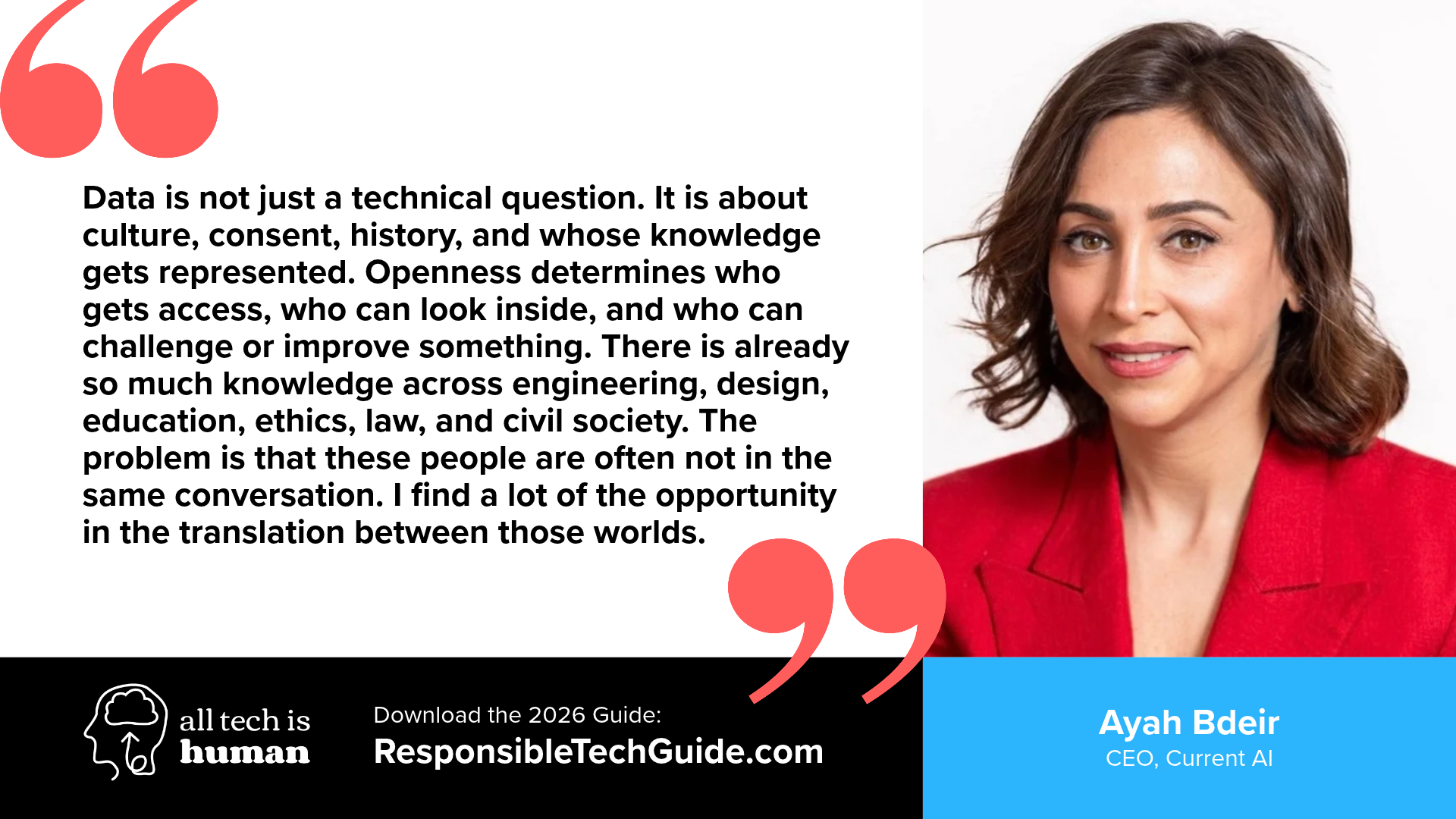
The same applies today. Data is not just a technical question. It is about culture, consent, history, and whose knowledge gets represented. Openness determines who gets access, who can look inside, and who can challenge or improve something. There is already so much knowledge across engineering, design, education, ethics, law, and civil society. The problem is that these people are often not in the same conversation. I find a lot of the opportunities in the translation between those worlds.
What does a better tech future look like to you?
A better tech future is one in which people feel able to shape the technology in their lives. A child should see herself as an inventor. Communities should be able to build tools that reflect their knowledge and languages, and public institutions should be able to examine and adapt the systems they depend on.
I have a real problem with a handful of companies deciding what experiences we all have with technologies that shape almost every aspect of our lives. We should have much more agency than that. I want technology we can examine, question, improve, and make our own, and a future where no one company, country, or group of people gets to decide the technological future for everybody else.
Learn more about Current AI here. Want more perspectives like this? Read the full Responsible Tech Guide, where this interview was featured.