Safety by Design: All Tech Is Human’s work in building a better tech future
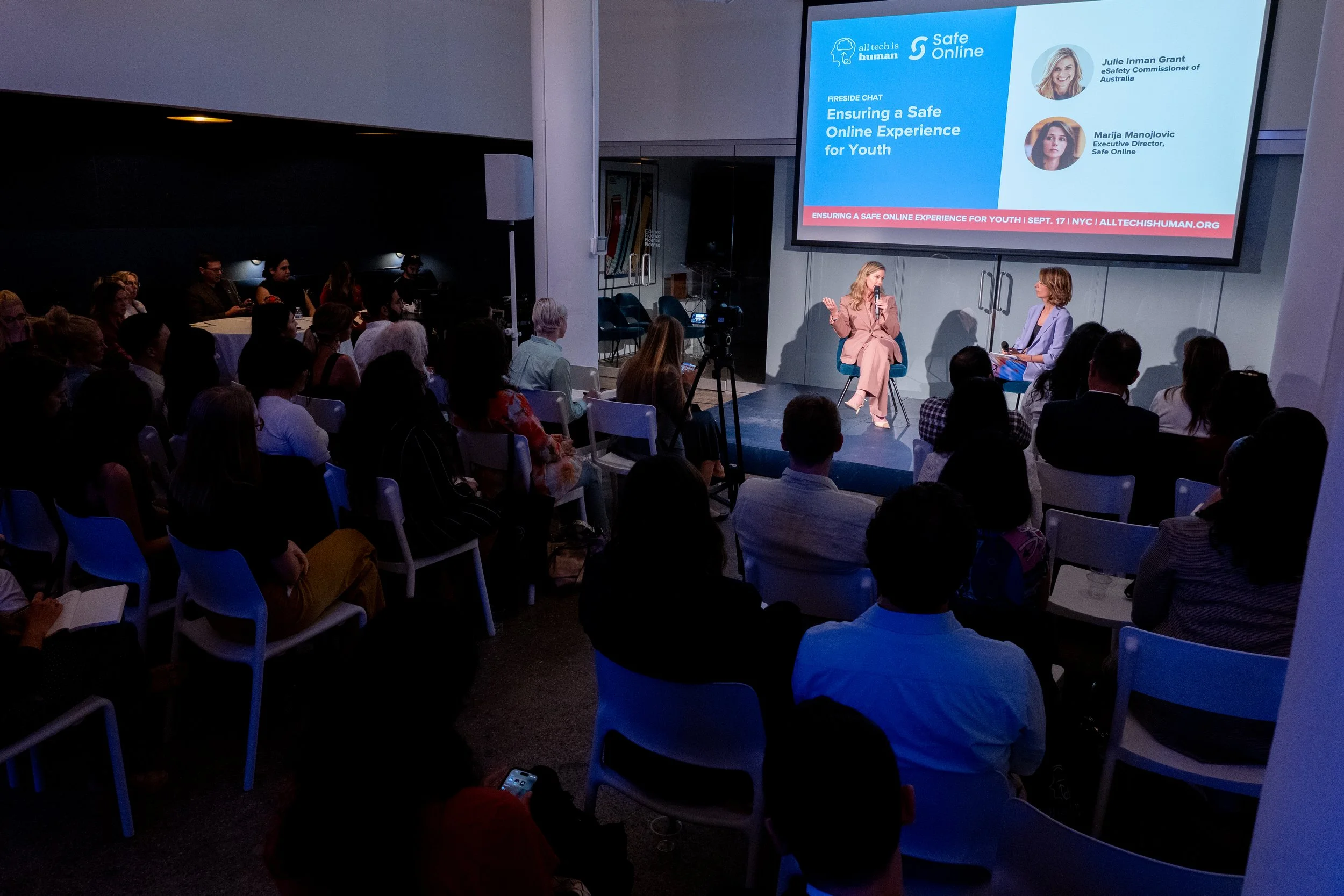
Julie Inman Grant, Australia’s eSafety Commissioner, in conversation with Marija Manojlovic, Executive Director of Safe Online, for a fireside chat at our joint September 2024 event with Safe Online in New York City.
There has been a lot of discussion in recent years about how to make the online environment safer. Creating safe products and environments, however, is not something that naturally occurs—it is often the result of societal and regulatory pressure placed on companies.
This is why many commentators like to refer to our current moment tackling issues related to social media and emerging technologies as a “Seatbelt Moment” (a concept discussed during All Tech Is Human’s inaugural summit in 2018); the necessity of seatbelts in cars seem painfully obvious today, but the history of making seatbelts mandatory faced a significant amount of resistance (evidenced in Ralph Nader’s Unsafe at Any Speed).
Our organization, which serves as a connective tissue across technology stakeholders, is ideally situated to embed the principles of Safety by Design throughout the ecosystem. This, in turn, helps reduce harm against children and the general public by improving products, policies, and standards in digital environments. In this article, you’ll learn about All Tech Is Human’s whole-of-ecosystem approach working towards a better tech future.

Guests networking during our July 2025 conference at The Royal Society in London.
What Is Safety by Design?
As defined by the Australian eSafety Commissioner, Safety by Design is a proactive approach to online product and service development that prioritizes user safety and rights at its core. It involves integrating safety considerations from the beginning to anticipate, detect, and eliminate online threats before they occur, rather than adding them as an afterthought.
Key components of Safety by Design
Proactive and preventative: Safety measures are embedded into the design and development process from the outset, rather than being retrofitted after harm has occurred.
Centralized user safety: It prioritizes user safety and rights, with the user's best interests considered a primary focus.
Accountability and transparency: It encourages technology companies to be accountable for user safety, including implementing policies, training, and design features that hold them responsible.
User empowerment: It includes providing users with technical tools and control to manage their own safety, with default settings set to be as secure as possible.
Holistic integration: Safety by Design aims to embed safety into the culture and leadership of an organization, not just the products themselves.

Viraj Doshi (Platform Safety Lead, Snap) speaking at our Responsible Tech Summit on October 27, 2026. He was joined by Ally Millar (Consumer Product Marketing for Wellbeing and Safety, Pinterest), Trisha Prabhu (Founder and CEO, ReThink and President, ReThink Citizens), Tobias Rose-Stockwell (Author, Outrage Machine), and Anil Dash (Technologist, Writer).
Seven ways All Tech Is Human is helping advance Safety by Design:
1. Building a Multi-Stakeholder Community Focused on Responsible Tech
The principles of Safety by Design involve anticipating harm and designing for broad well-being. Instead of being a simple problem with a straightforward solution, anticipating harm and designing for broad well-being requires a comprehensive understanding and participation from all stakeholders. All Tech Is Human serves as a crucial, agnostic space that creates a sandbox for knowledge sharing and collaboration. In addition, decisions need to be actively informed by groups that are often not at the proverbial table, like parents and youth.
We are aiming to promote the principles of Safety by Design by:
Bringing together technologists, policymakers, academics, civil society, and impacted communities. All Tech Is Human has been focused on uniting broad public insight and involvement with subject matter expertise.
Ensuring that conversations about emerging technology include broad societal perspectives; this is why Responsible Tech, as a field and movement, has a strong interdisciplinary appreciation.
Creating spaces where risks, harms, and mitigation strategies are examined collaboratively before technologies scale.
GET INOVLVED:
Our organization runs a large Slack community (13,000 members across 114 countries) that is designed for collaboration and the cross-pollination of ideas across civil society, government, industry, and academia.
Community members host independently-organized ATIHx gatherings. More information can be found on our Slack location-specific channels for Boston, Toronto, Philadelphia, and Barcelona (with conversations flowing in many more city channels).
We have a bi-monthly livestream series where we discuss child safety and Safety by Design.
All Tech Is Human hosts in-person gatherings with panels, fireside chats, and networking opportunities. These are currently held in New York, London, San Francisco, and Washington, DC.
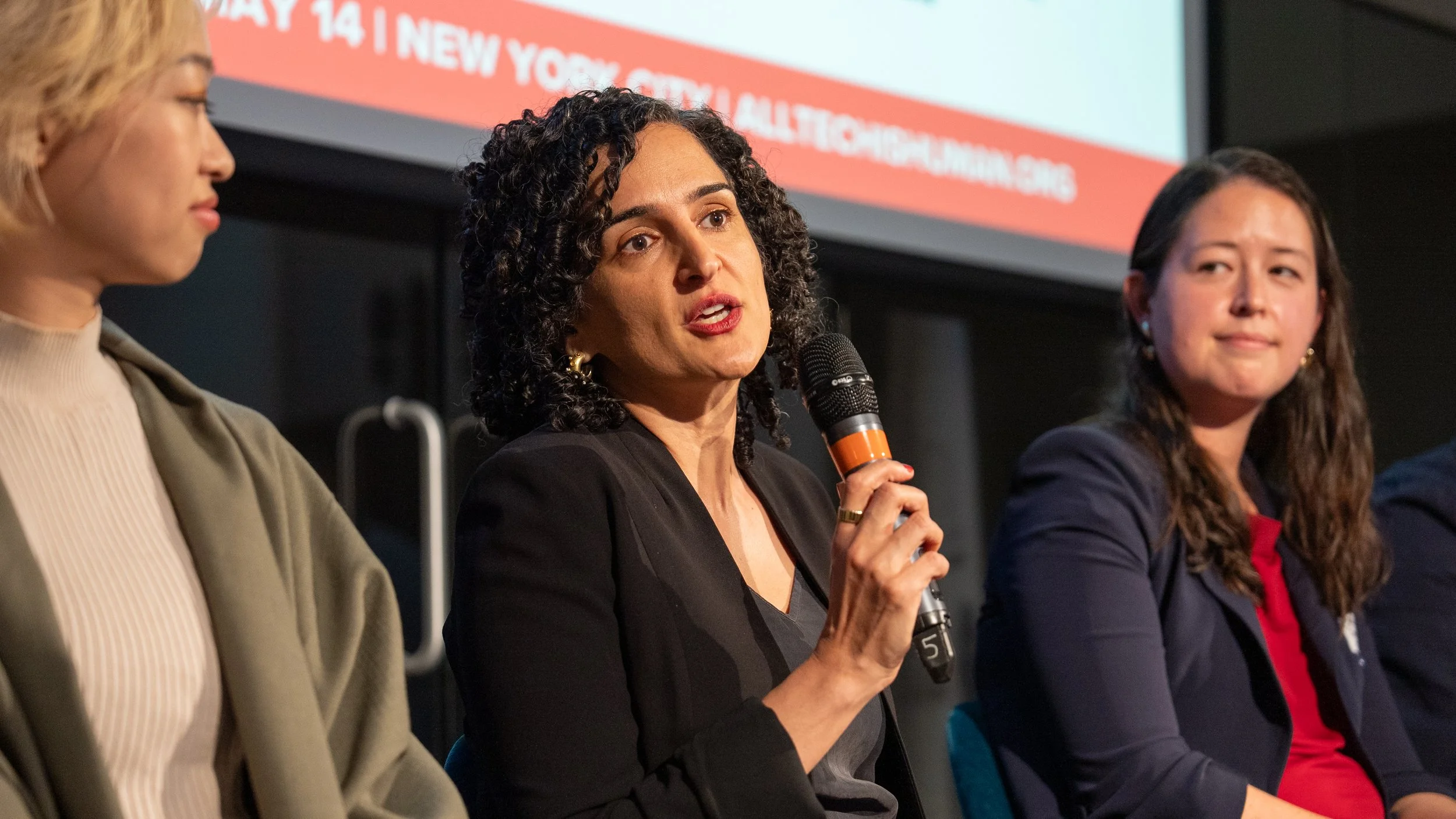
Afrooz Kaviani Johnson (Child Protection Specialist, UNICEF) speaks at our Future of Trust & Safety event alongside Juliet Shen (Head of Product, ROOST) and Dr. Rebecca Portnoff (Vice President of Data Science & AI, Thorn).
2. Publishing Guides & Resources that Embed Safety Principles
Our organization has released numerous reports over the years, including Improving Social Media and the HX Report: Aligning Our Tech Future With Our Human Experience, along with white papers that understand the tensions at play, like Balancing Privacy and Child Safety in Encrypted Environments.
All Tech Is Human’s flagship publication is our annual Responsible Tech Guide. In our most recent version, you will also see sample job descriptions for those working in child safety and the larger field of Trust & Safety. All of our resources are focused on the underlying components of harm prevention and accountability (along with prosocial design) to mitigate unintended consequences and foreseeable risks, and promote frameworks for safer technologies and environments.
GET INVOLVED:
Download our Responsible Tech Guide
View our daily posts on LinkedIn, which often include resources
Join our bi-monthly newsletter, where we also share resources
Our Responsible Tech Guide highlights the growing ecosystem of child safety professionals who work at the intersection of technology, policy, and human rights. These roles focus on designing digital environments where children can explore, learn, and connect safely. Featured child safety practitioners include experts in Safety by Design, trust & safety operations, youth wellbeing, online harm prevention, AI risk mitigation, and child sexual abuse material (CSAM) detection and response.
By showcasing leaders from nonprofits, industry, academia, and more, the guide illustrates how child safety has become an essential pillar of responsible technology. These roles demonstrate the multidisciplinary nature of protecting young people online, combining product design, policy development, research, content moderation, and advocacy to build digital spaces that prioritize protection, dignity, and informed participation for the next generation.
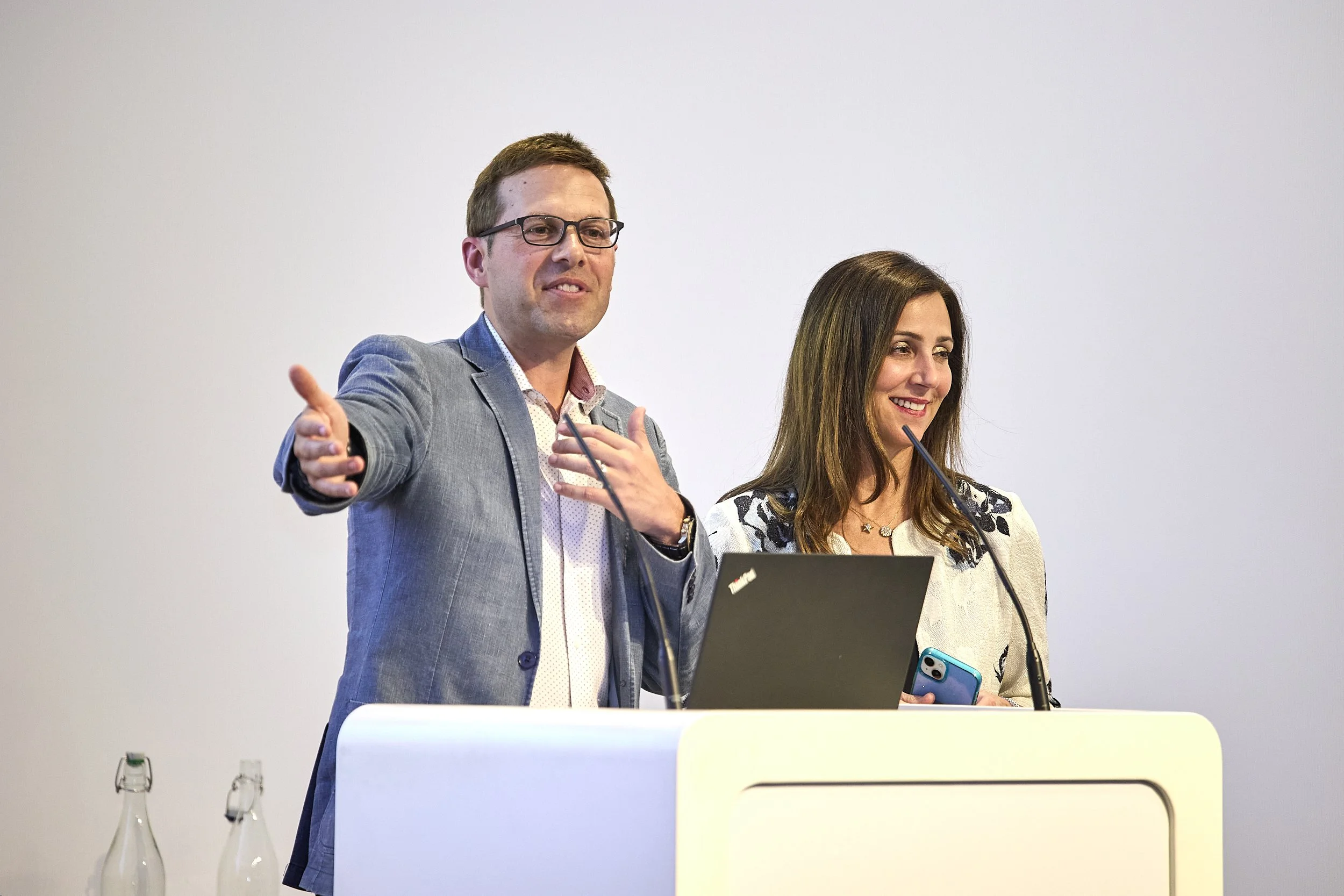
David Ryan Polgar (Founder & President of All Tech Is Human) on stage with Baroness Joanna Shields, who delivered welcome remarks at our conference in June 2024 in London.
3. Education & Talent Pipelines in Responsible Tech
By growing pathways into responsible tech roles, ATIH helps ensure that more people in tech organizations have:
Training in ethical product development
Familiarity with risk assessment frameworks
Skills to integrate safety considerations early in design cycles
The more professionals who understand Safety by Design principles, the more likely they are to be implemented.
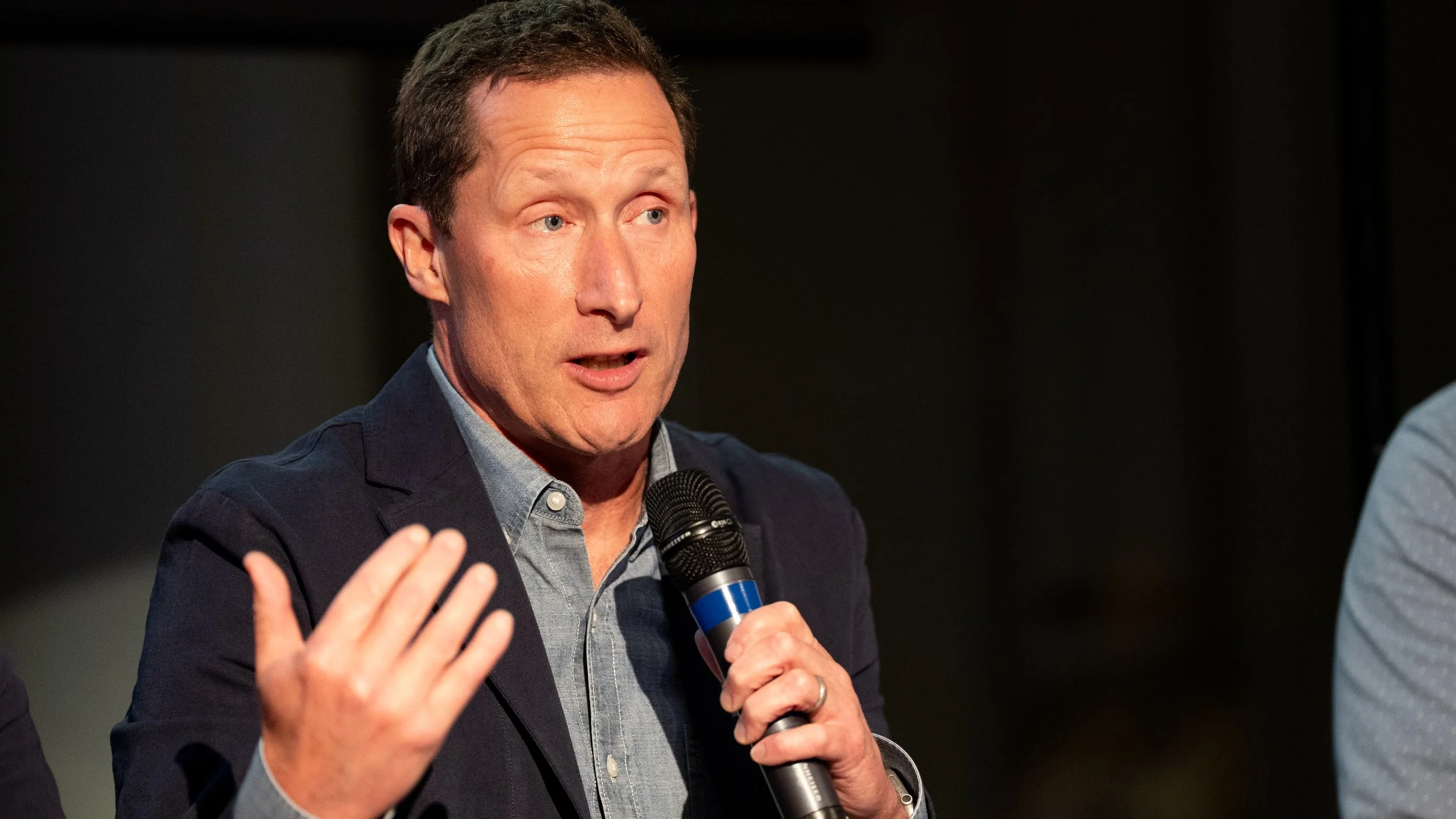
Sean Litton (President & CEO of the Technology Coalition) speaking at our Future of Trust & Safety gathering in 2024 in New York.
4. Convenings to Promote Safety by Design and Multistakeholder Collaboration
We host numerous gatherings, panels, and roundtables on issues directly aligned with Safety by Design, including:
Responsible AI and AI governance
Trust & Safety
Youth safety and digital well-being
Community-centered approaches to technology
These gatherings amplify the importance of designing safety proactively. Here are some recent All Tech Is Human gatherings that center youth, online safety, and Safety by Design themes:
“Responsible Tech DC: A Better Tech Future for Youth” (Washington, DC, February 28, 2024) — This was a landmark gathering of Trust & Safety professionals, researchers, civil society leaders, and youth advocates and leaders. All Tech Is Human
“Strengthening the Information Environment” (NYC, March 6, 2024) — A curated gathering and reception in collaboration with the Consul General of Finland in New York. The stage activity focused on information integrity and the harms of the AI era to the information ecosystem. All Tech Is Human
“The Future of Trust & Safety” (NYC, May 14, 2024) — Specifically designed to bring together emerging and established Trust & Safety professionals to talk about breaking into the field and its future. Panels included discussions on cultivating the next generation of trust & safety leaders, and safety by design for Generative AI to prevent child sexual abuse. All Tech Is Human
“Responsible Tech London” (London, June 27, 2024) — Brought together a mix of Trust & Safety professionals, researchers, civil society leaders, government officials, students, journalists, advocates, and more. Included a panel on the future of play and building a safe digital playground for children, as well as fostering prosocial design and wellbeing for children’s positive digital experiences.
“Ensuring a Safe Online Environment for Youth” (NYC, September 17, 2024) — ATIH hosted a panel exploring harms youth encounter on social platforms, how AI can exacerbate risk, how Trust & Safety teams protect youth, and multi-stakeholder strategies for a safer digital environment. All Tech Is Human
“Safety by Design: Making Impact and Mobilizing Change” (NYC, April 23, 2025) — An ATIH-curated, 200-person multi-stakeholder gathering focused on operationalizing Safety by Design across civil society, government, industry, and academia. All Tech Is Human
“Responsible Tech DC: The Future of Trust & Safety” (Washington, DC, June 4, 2025) — Entirely centered on trust & safety and policy, with a panel on the trust and safety policy landscape and a panel on the future of trust and safety. Hosted in collaboration with Resolver Trust and Safety, bringing together T&S leaders from industry, civil society, academia, and government. All Tech Is Human
“Safety by Design for the Next Generation: Navigating the Evolution of Child Safety Policy” (London, July 16, 2025) — A collaboration with The Royal Society, featuring guests from the Oak Foundation. The programming focused explicitly on child safety policy and online harms, featuring safety leaders from Meta, Ofcom, and others on stage. All Tech Is Human
“ATIHxGoogle Reception on the margins of TrustCon” (San Francisco, July 22, 2025) — An evening of connection and conversation on the evolving landscape of trust & safety. The event brought together experts and advocates from the field to network and engage in meaningful discussion on the sidelines of TrustCon 2025.
“Careers in Trust and Safety: A Candid Conversation” (NYC, October 15, 2025) —All Tech Is Human partnered with Cornell Tech to host an engaging conversation on careers in Trust & Safety. The event brought together industry leaders, emerging professionals, and students to explore what it means to build safer, more trustworthy digital spaces today, and how people from diverse backgrounds can find their pathway into this growing field.
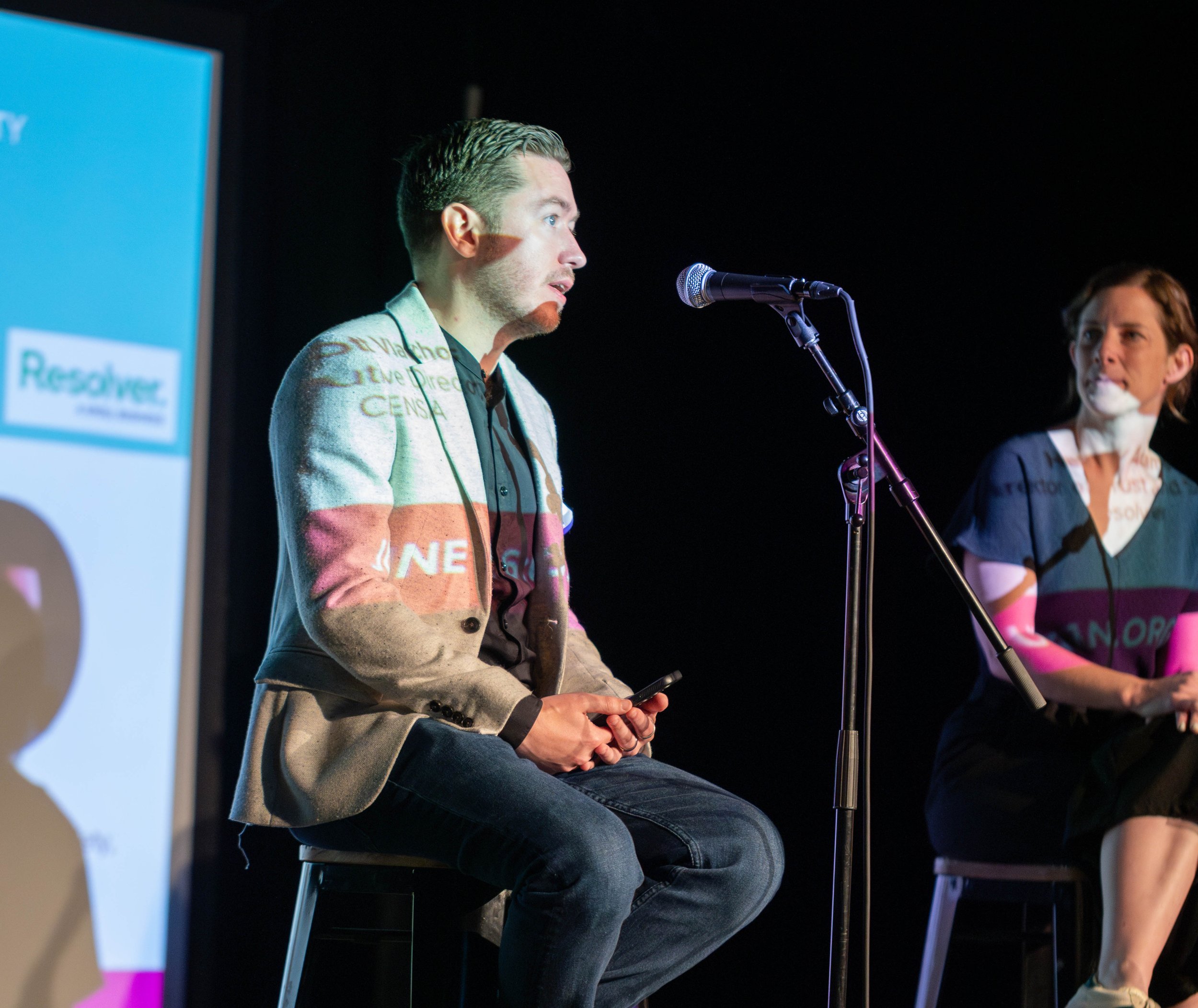
Henry Adams (Director of Trust & Safety Intelligence, Resolver) speaking at our June 2025 gathering in Washington, DC.
5. Cross-Sector Collaboration & Fieldbuilding
The implementation of Safety by Design cannot be done solely by tech companies. Instead, it requires the participation of civil society, researchers, policymakers/regulators, and the general public. Some of the ways that All Tech Is Human facilitates this cross-sector collaboration and fieldbuilding include:
Acting as a bridge between sectors
Encouraging shared norms and vocabulary around Responsible Tech
Emphasizing the importance of interdisciplinary problem-solving
The application of Safety by Design requires this cross-sector scaffolding to move from principles and discussion to implementation and practice. This is exemplified in our recent partnership with Thorn to develop industry standards and principles for reducing AI-generated harms against children.
Companies with public commitments include Amazon, Anthropic, Civitai, Google, Meta, Microsoft, Mistral AI, OpenAI, Stability AI, and more; many of these companies published their own announcements about adopting the principles.
The working group that All Tech Is Human was part of for this partnership with Thorn led to the development of a Safety by Design for Generative AI white paper.
David Ryan Polgar, Founder & President of All Tech Is Human, was recently interviewed on Thorn’s Safe Spaces podcast about the work of our organization.
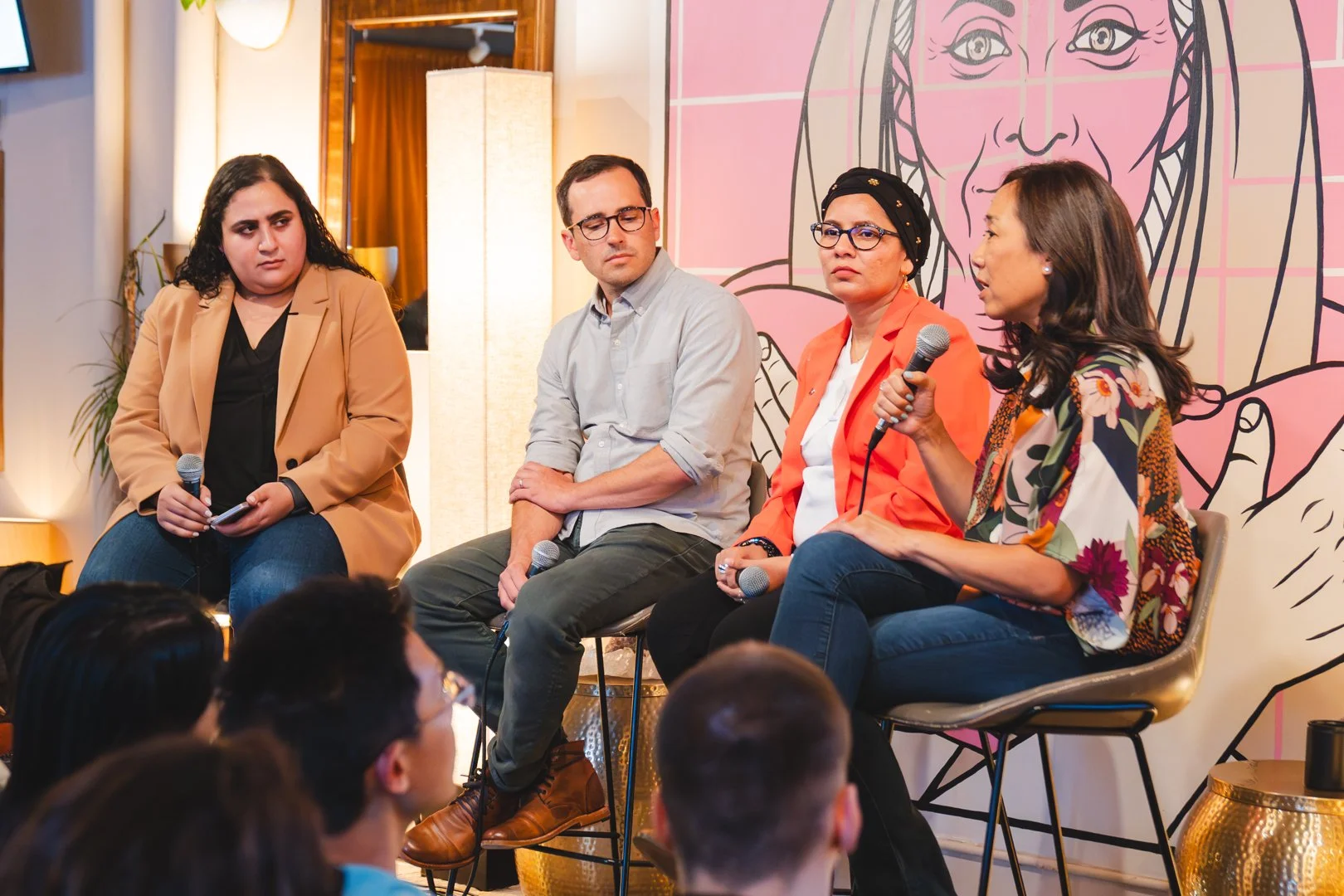
Tami Bhaumik (VP of Digital Civility at Roblox), speaking at our San Francisco gathering in August 2023.
6. Raising Public Awareness & Embedding Responsible Tech Values
All Tech Is Human’s strength is in narrative change. Learning into our broad range of activities (Slack, newsletter, in-person gatherings, livestreams, workshops, roundtables, social media, media engagement), we perpetually promote the underlying principles of Safety by Design. The aim is to:
Normalize conversations about risk mitigation
Promote wellbeing as a core design principle
Help shift cultural expectations toward safer technology and environments
Safety by Design should be our expectation, as opposed to a nice-to-have.
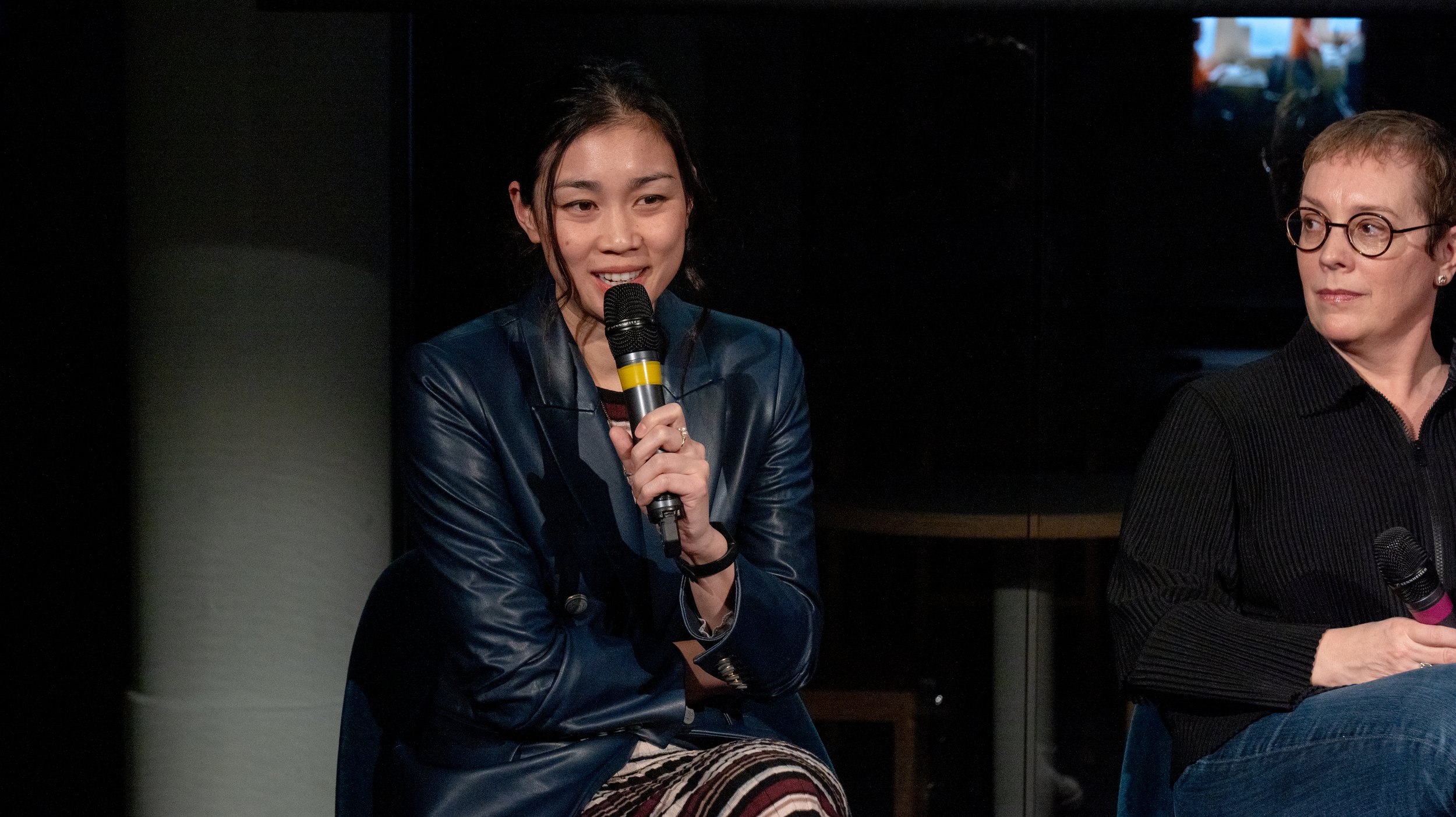
Tracy Chou (Founder & CEO of Block Party) speaks at a January 2024 All Tech Is Human gathering, joined on stage by Julia Agwin (Founder & CEO of Proof News, New York Times Contributing Opinion Writer).
7. Supporting the Ecosystem Working on Safety by Design
All Tech Is Human is seen as a meta-connector that frequently collaborates with or highlights the work of organizations doing adjacent or overlapping work, such as:
Trust & Safety organizations
Youth, Tech, & Wellbeing
Responsible AI
By strengthening the overall Responsible Tech ecosystem and its ability for knowledge-sharing and collaboration, All Tech Is Human is accelerating the adoption of Safety by Design.
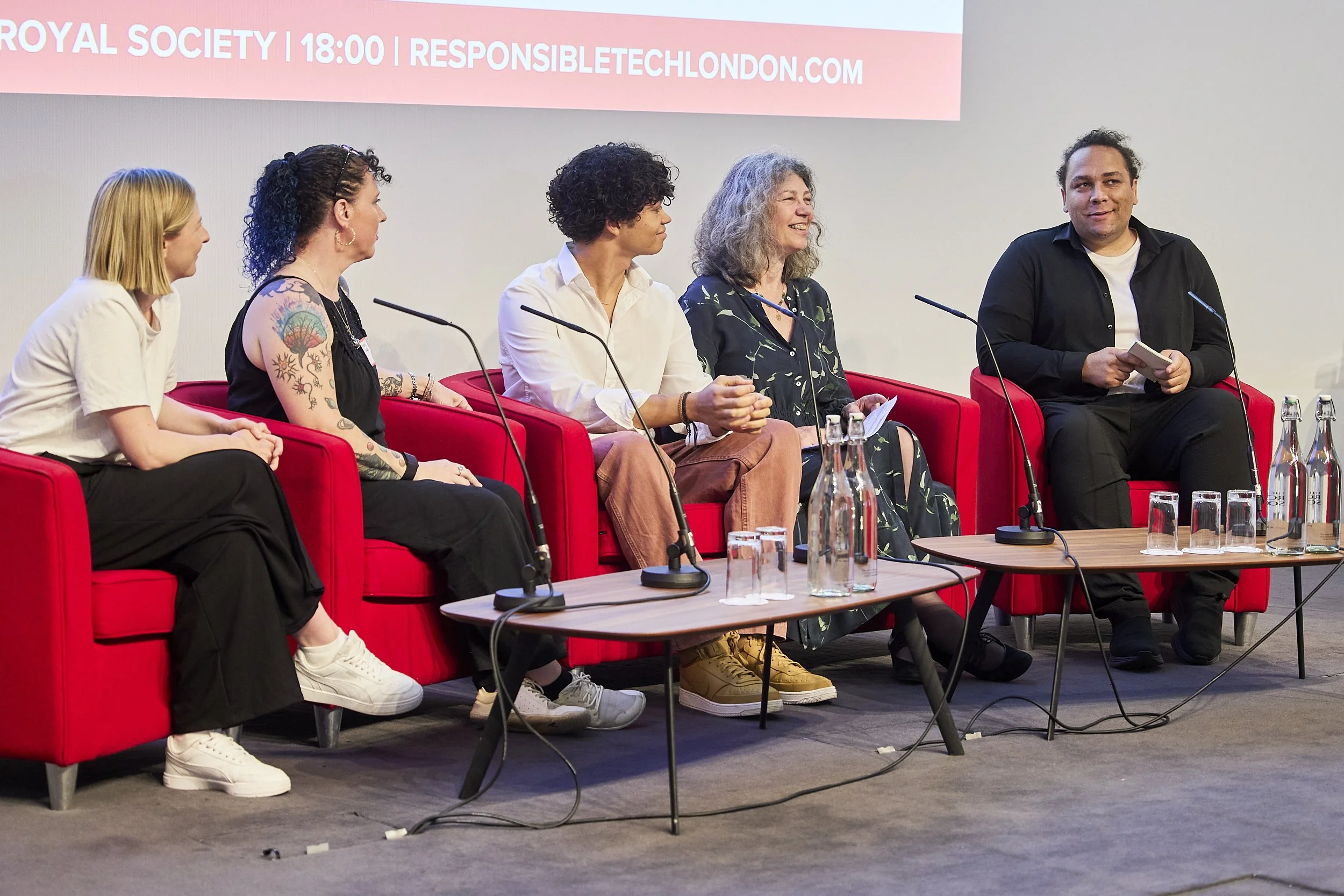
Continued Learning | Safety by Design Conversations
All Tech Is Human is a nonprofit organization dedicated to building a more responsible, inclusive, and ethical tech future by uniting a broad range of people and ideas across civil society, government, industry, and academia. Our whole-of-ecosystem approach brings together technologists, academics, civil society leaders, and everyday individuals to collaboratively address complex challenges around AI governance, digital rights, platform accountability, and the broader social impacts of technology.
We aim to develop a better approach for tackling thorny tech & society issues; one that leverages collective intelligence, involvement, and action to create needed systemic change.
Through community-building, talent cultivation, public programming, research, and analysis, our organization fosters dialogue that bridges gaps between disciplines and encourages shared responsibility for shaping technology that aligns with our values. By fostering collaboration and elevating a wide range of perspectives, All Tech Is Human works to ensure technology is shaped by and for the public interest.