Responsible Tech Summer Reading List 2024
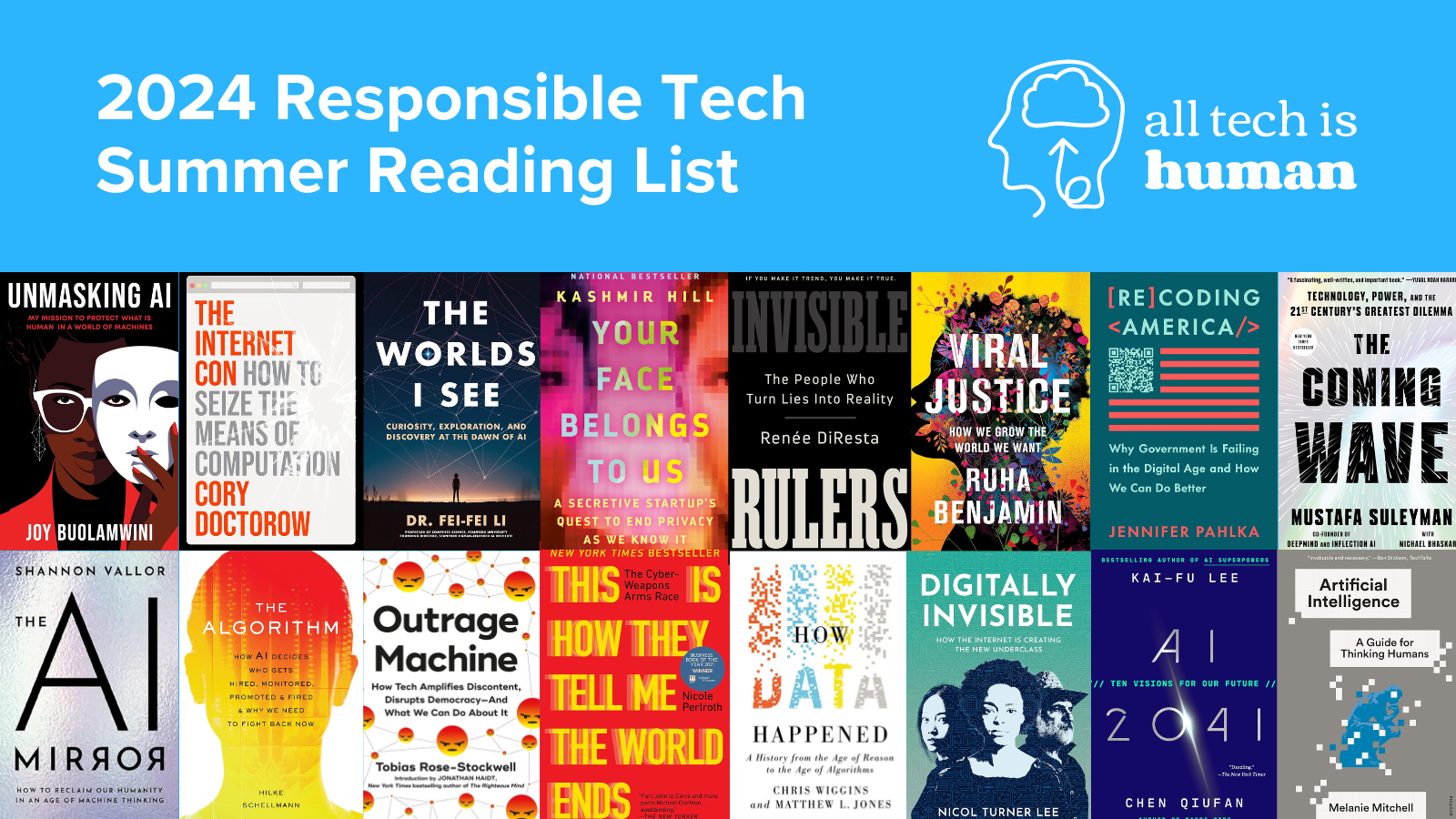
Each summer, All Tech Is Human curates its Responsible Tech Summer Reading List with the help of our global community. Discover almost 30 books that are helping to educate, inform, and inspire the growing Responsible Tech movement.
Are there books that you think should be added to this list? Get involved with All Tech Is Human and let us know! Our global community includes tens of thousands of individuals sharing resources and collaborating on our Slack, regular in-person gatherings, weekly livestream series, working groups, the Responsible Tech Mentorship Program, the Responsible Tech University Network, and more.
See all of our projects and links here | Download our new 2024 Ecosystem Pulse Report: Responsible Tech Demographics
AI 2041 by Kai-Fu Lee and Chen Quifan
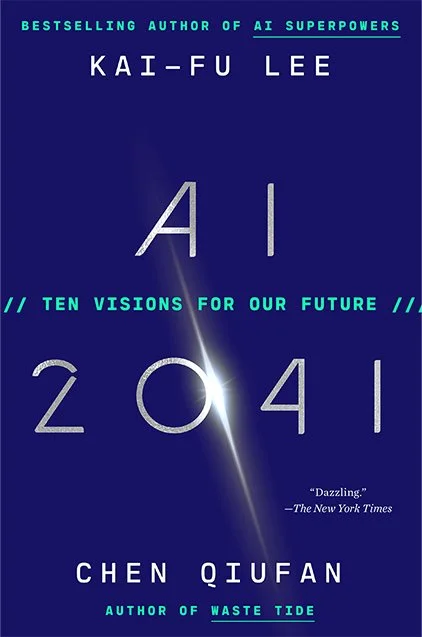
“In this “inspired collaboration” (The Wall Street Journal), Lee and Chen join forces to imagine our world in 2041 and how it will be shaped by AI. In ten gripping, globe-spanning short stories and accompanying commentary, their book introduces readers to an array of eye-opening settings and characters grappling with the new abundance and potential harms of AI technologies like deep learning, mixed reality, robotics, artificial general intelligence, and autonomous weapons.” [Book description]
The AI Mirror: How to Reclaim Our Humanity in an Age of Machine Thinking by Shannon Valor
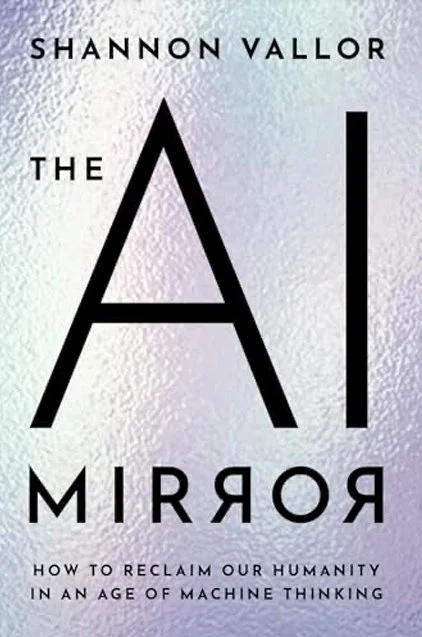
“All of the books I've chosen examine technology not as an object that is separate and apart from the people who create and use them but as a phenomenon that is embedded in who we are, how we see the world and our relationships with and to each other. I think the only way to generate a more vibrant understanding of how to make ethical choices in response to new technologies is to develop more complete representations of the context(s) which give rise to and credibility to the technologies.” -Christina Fedor
The Algorithm: How AI Decides Who Gets Hired, Monitored, Promoted, and Fired and Why We Need to Fight Back Now by Hilke Schellmann
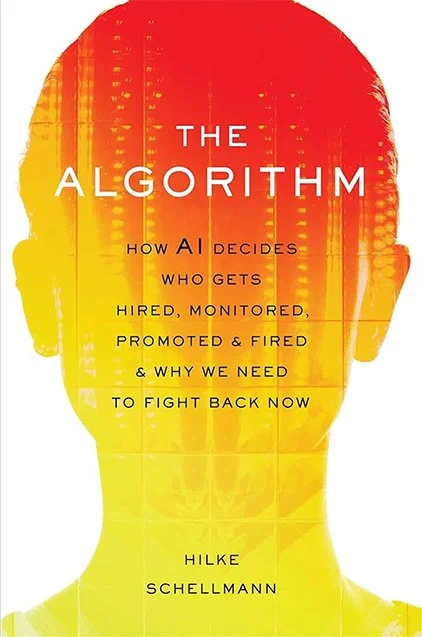
“The Algorithm tells an even bigger story with Schellmann discovering faulty algorithms and systemic discrimination of women and people of color, which may have already harmed thousands of job seekers and employees. It advocates to go beyond these tools to more thoughtfully consider how we hire, promote, and treat human beings—with or without AI. As Schellmann emphasizes, we need to decide how we build algorithmic tools in any industry and what protections we need to put in place in an AI-driven world.” [Book description]
📺 Watch our livestream with author Hilke Schellmann.
Artificial Intelligence: A Guide for Thinking Humans by Melanie Mitchell
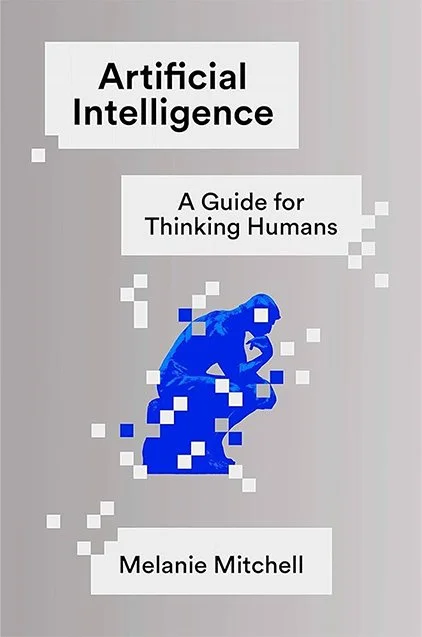
“This book was my first introduction to the world of AI and it enabled me to understand the history and evolution of this technology. It helped me link AI with my background in neuropsychology and allowed me to understand its long-term social impact.” -Stephie Shen
The Coming Wave: Technology, Power, and the Twenty-first Century's Greatest Dilemma by Mustafa Suleyman
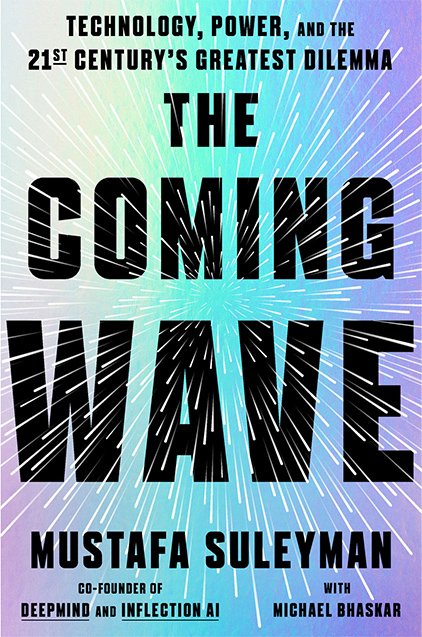
“One of the most interesting topics of this book is the connection between two rising technologies, artificial intelligence and bioengineering. I was not as familiar with the bio side, so it was interesting to learn about the threats it poses, especially in the context of the COVID-19 pandemic.
Suleyman demonstrates a deep understanding of the social and historical context of technology and its implications for our future, which is a very refreshing perspective from someone who is originally a technologist. I found his discussion on international relations and politics as they relate to AI development especially interesting, and the book is filled with fascinating examples from history. I was captivated by Suleyman's ideas and admire his firm advocacy of his 10-part framework and the integration of all its parts!” -Shreeya Chand
Digitally Invisible: How the Internet Is Creating the New Underclass by Nicol Turner Lee
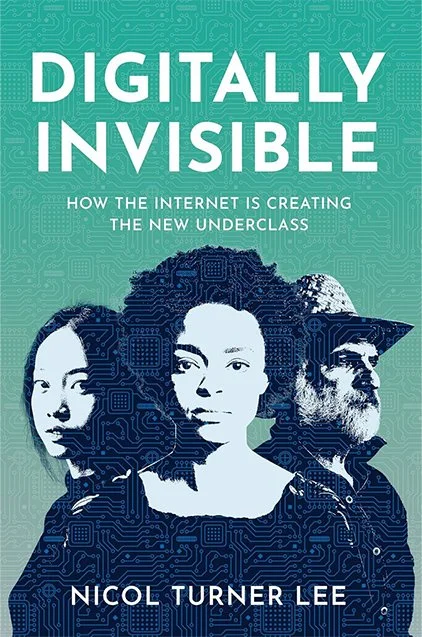
“In this book, Nicol Turner Lee, a leading expert on the American digital divide, uses personal stories from individuals around the country to show how the emerging digital underclass is navigating the spiraling online economy, while sharing their joys and hopes for an equitable and just future.
Turner Lee argues that achieving digital equity is crucial for the future of America’s global competitiveness and requires radical responses to offset the unintended consequences of increasing digitization. In the end, Digitally Invisible proposes a pathway to more equitable access to existing and emerging technologies, while encouraging readers to weigh in on this shared goal.” [Book description]
How Data Happened: A History from the Age of Reason to the Age of Algorithms by Chris Wiggins
“Really thoughtful and well-researched; includes ethics and history of data and the development of AI from a point of view that is very human-focused. Ultimately, by showing how we got here, tells us that none of it is inevitable, and that we can choose new, better paths forward.” -Andrea Dean
The Internet Con: How to Seize the Means of Computation by Cory Doctorow
“This book helps frame some of the downfalls of modern technology and how we ended up with such a rough state of the internet. Then he goes into some ideas to fix it in the future.” -Clay Rosenthal
📺 Watch our livestream with author Cory Doctorow.
Invisible Rulers: The People Who Turn Lies into Reality by Renée DiResta
“Renée DiResta has the remarkable ability to take readers through the journey of why and how narratives spread online and the challenge of responding to the new reality of "bespoke realities" — our increasingly polarized, personally tailored and emotional news and information landscape.” -John Perrino
Our Biggest Fight: Reclaiming Liberty, Humanity, and Dignity in the Digital Age by Frank McCourt & Michael Casey
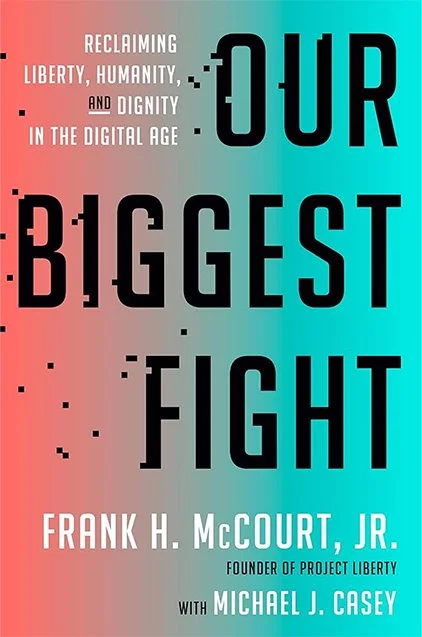
“Inspired by historical calls to action like Thomas Paine’s Common Sense, Our Biggest Fight argues that we must act now to embed the core values of a free, democratic society in the internet of tomorrow. Do it right and we will finally, properly, unlock its immense potential.”
📺 Watch our book launch talk with author Frank McCourt.
Outrage Machine: How Tech Amplifies Discontent, Disrupts Democracy―And What We Can Do About It by Tobias Rose Stockwell
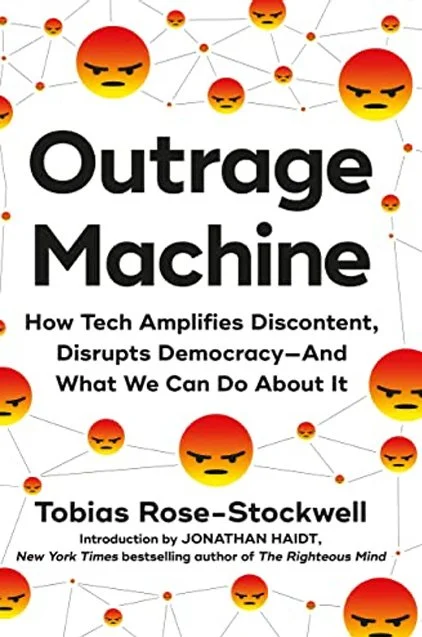
“Author, designer, and media researcher Tobias Rose-Stockwell shares the defining shifts caused by these technologies, and how they have ignited a society-wide crisis of trust. Drawing from cutting-edge research and vivid personal anecdotes, Rose-Stockwell illustrates how social media has bound us to an unprecedented system of public performance, training us to react rather than reflect, and attack rather than debate.”
📺 Watch our livestream with Tobias Rose Stockwell.
Plurality: The Future of Collaborative Technology and Democracy by E. Glen Weyl, Audrey Tang, and Community
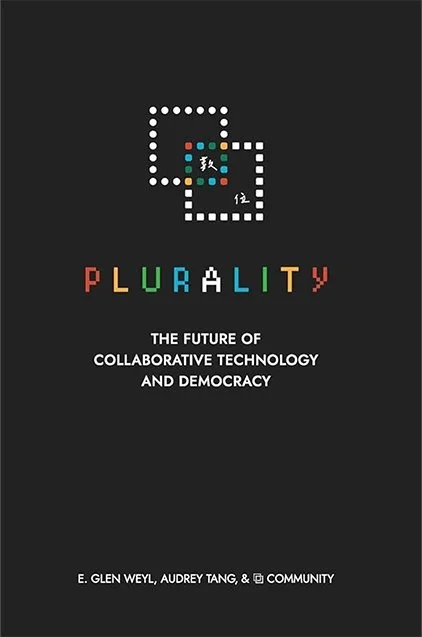
“A compelling case study of digital democracy in action, which is, incidentally, also a blueprint for how to involve citizen participation in the development, design, and deployment of AI.” -Lucia Komljen
Did you know that Audrey Tang is a Mozilla Rise25 winner? Read more here
Raising Hell, Living Well: Freedom from Influence in a World Where Everyone Wants Something from You (including me) by Jessica Elefante
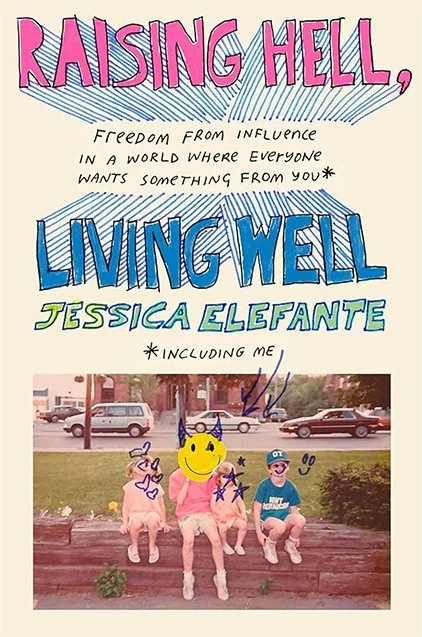
“Our lives are being choreographed by forces that want something from us. Everything from ingrained family values to mind-altering algorithms create our foundations, warp how we see the world, manipulate our decisions, and dictate our beliefs. Yet rarely do we question these everyday influences of our modern times even as we go further down the path of unwell, unhappy, and unhinged.
A high-spirited exploration through the troublesome influences of our world, Raising Hell, Living Well, Jessica Elefante’s eye-opening debut, follows one bullshit artist’s journey, from small-time salesperson to award-winning corporate strategist to founder of the digital wellbeing movement Folk Rebellion, in coming to terms with how she was wielding influence—and the forces she was under herself.” [Book description]
Recoding America: Why Government Is Failing in the Digital Age and How We Can Do Better by Jennifer Pahlka
“This book highlights what needs to change for tech professionals to be effective in government. It's a must read for anyone interested in civic tech who ever thought they could ignore policy.” -Melissa Eggleston
Ruined by Design: How Designers Destroyed the World, and What We Can Do to Fix It by Mike Monteiro

“This talks about the responsibility of the designer to analyze and understand the impacts their design has on society as well as the choice and control they have to work for ethical tech companies as well. It discusses in detail the unforeseen negative externalities products can have on the working conditions and lives of other humans.” -Bethany Sadler-Jasmin
This Is How They Tell Me the World Ends: The Cyberweapons Arms Race by Nicole Perlroth
“Terrifying look under the hood of how the cyber weapons and spyware industry evolved to where we are today— raising ethical questions around the right to privacy and nation state security.” -Jessica Hao
Unmasking AI: My Mission to Protect What Is Human in a World of Machines Joy Buolamwini
“Unmasking AI goes beyond the headlines about existential risks produced by Big Tech. It is the remarkable story of how Buolamwini uncovered what she calls “the coded gaze”—the evidence of encoded discrimination and exclusion in tech products—and how she galvanized the movement to prevent AI harms by founding the Algorithmic Justice League. Applying an intersectional lens to both the tech industry and the research sector, she shows how racism, sexism, colorism, and ableism can overlap and render broad swaths of humanity “excoded” and therefore vulnerable in a world rapidly adopting AI tools. Computers, she reminds us, are reflections of both the aspirations and the limitations of the people who create them.” [Book description]
📺 Watch our conversation with author Joy Buolamwini.
Value Sensitive Design: Shaping Technology with Moral Imagination by Batya Friedman and David Hendry
“This book is a foundational text in thinking about how to design systems (including AI systems) that are responsive to people's values and, as a result, can actually solve problems in context. It discusses systems design in a sociotechnical vein and articulates several reasons for doing so and key methodologies for operationalizing those principles. No technologist should design systems, especially AI systems, without having read this book thoroughly first.” -Matt Kennedy
Viral Justice and Imagination: A Manifesto by Ruha Benjamin
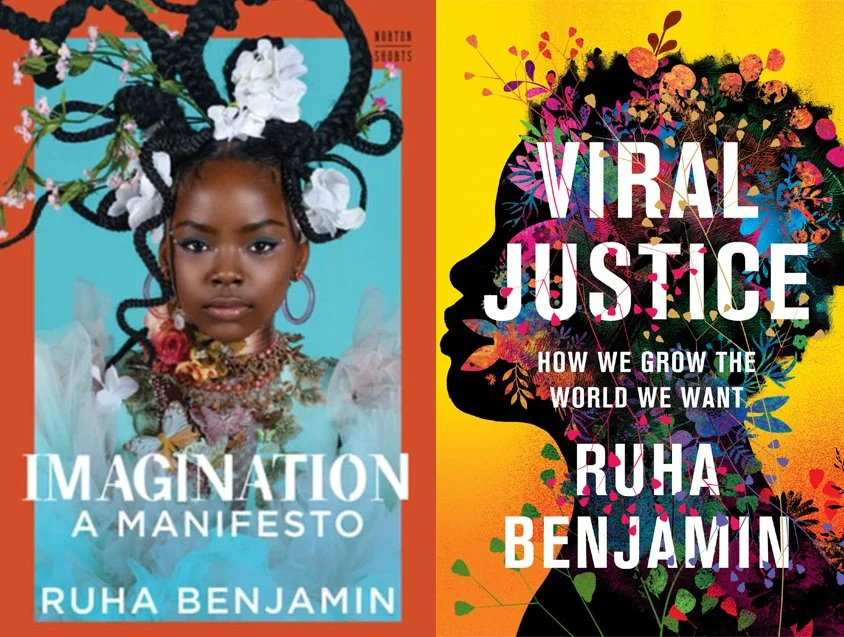
“These books offer a sense of vision and imagination around just technologies, examples and stories of alternatives to our current platforms, and how we imagine differently and in solidarity to move into the future together.” -Kelly Neuner
The Worlds I See: Curiosity, Exploration, and Discovery at the Dawn of AI by Dr. Fei-Fei Li
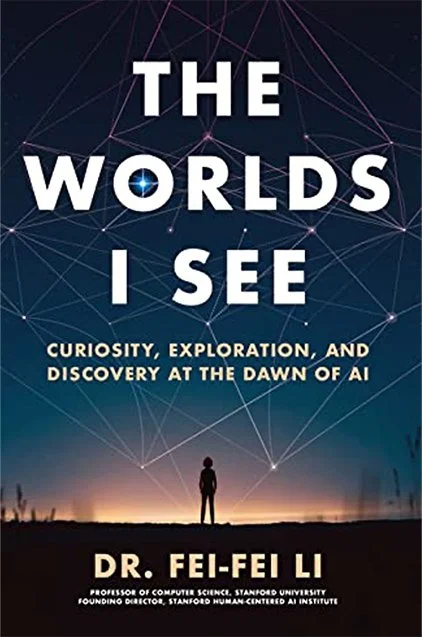
“The Worlds I See is a story of science in the first person, documenting one of the century’s defining moments from the inside. It provides a riveting story of a scientist at work and a thrillingly clear explanation of what artificial intelligence actually is―and how it came to be. Emotionally raw and intellectually uncompromising, this book is a testament not only to the passion required for even the most technical scholarship but also to the curiosity forever at its heart.” [Book description]
Your Face Belongs to Us: A Secretive Startup's Quest to End Privacy as We Know It by Kashmir Hill
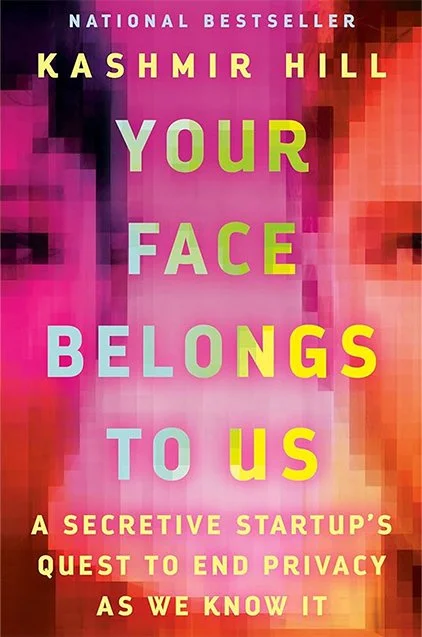
“Facial recognition technology has been quietly growing more powerful for decades. This technology has already been used in wrongful arrests in the United States. Unregulated, it could expand the reach of policing, as it has in China and Russia, to a terrifying, dystopian level.
Your Face Belongs to Us is a gripping true story about the rise of a technological superpower and an urgent warning that, in the absence of vigilance and government regulation, Clearview AI is one of many new technologies that challenge what Supreme Court Justice Louis Brandeis once called “the right to be let alone.” [Book description]
📺 Watch our book launch talk with author Kashmir Hill.
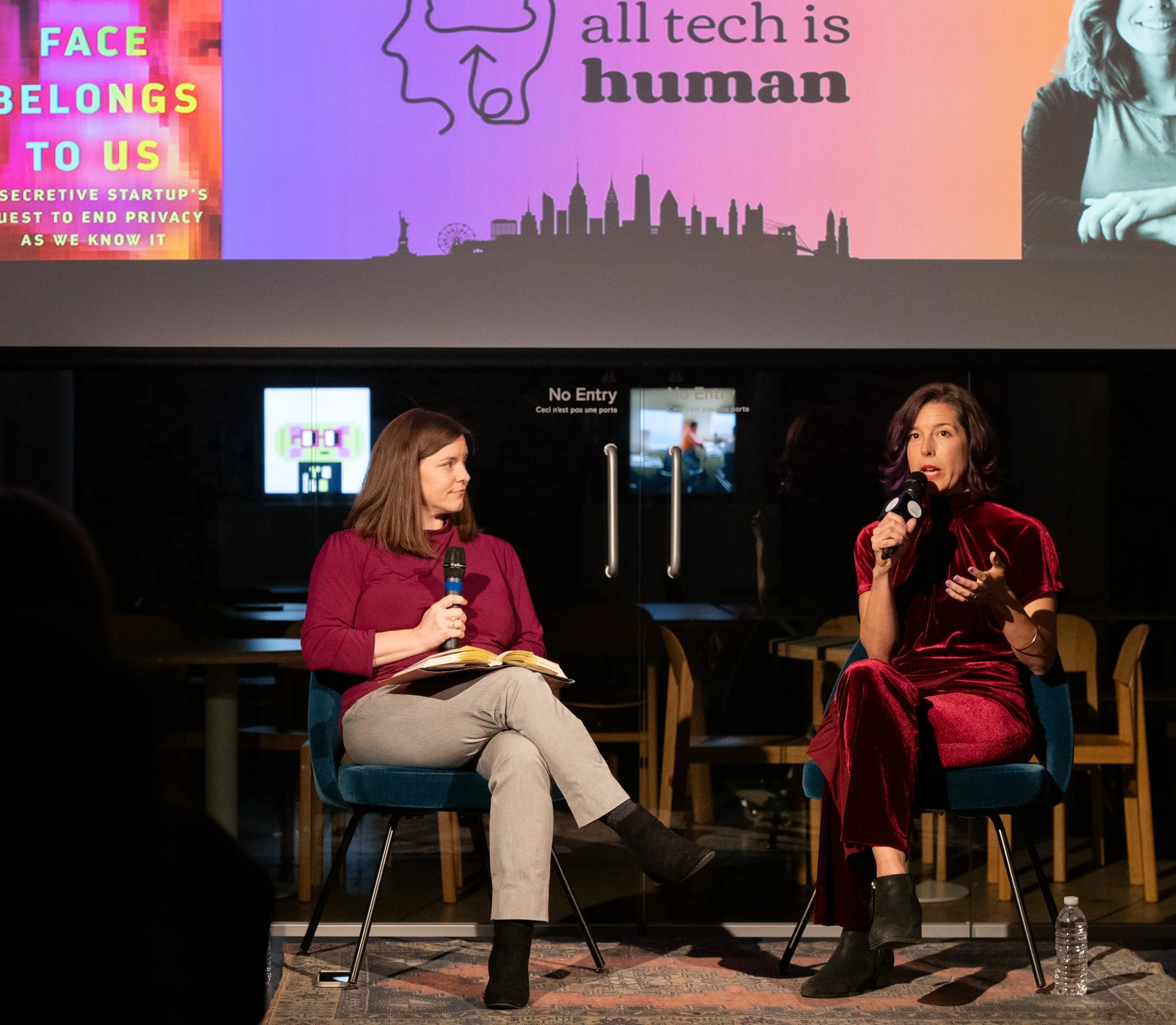
All Tech Is Human’s Rebekah Tweed interviewing Kashmir Hill on stage in NYC in October 2023

There are lot of book lovers in the All Tech Is Human community! Here is the line waiting to get inside for Kashmir Hill’s book launch with All Tech Is Human
AND, COMING THIS FALL…
AI Snake Oil: What Artificial Intelligence Can Do, What It Can't, and How to Tell the Difference by Arvind Narayanan and Sayash Kapoor
“While acknowledging the potential of some AI, such as ChatGPT, AI Snake Oil uncovers rampant misleading claims about the capabilities of AI and describes the serious harms AI is already causing in how it’s being built, marketed, and used in areas such as education, medicine, hiring, banking, insurance, and criminal justice. The book explains the crucial differences between types of AI, why organizations are falling for AI snake oil, why AI can’t fix social media, why AI isn’t an existential risk, and why we should be far more worried about what people will do with AI than about anything AI will do on its own. The book also warns of the dangers of a world where AI continues to be controlled by largely unaccountable big tech companies.” [Book description]
Did you know that Arvind Narayanan is a Mozilla Rise25 winner? Read more here
Taming Silicon Valley: How We Can Ensure That AI Works for Us by Gary Marcus
“Marcus explains the potential—and potential risks—of AI in the clearest possible terms and how Big Tech has effectively captured policymakers. He begins by laying out what is lacking in current AI, what the greatest risks of AI are, and how Big Tech has been playing both the public and the government, before digging into why the US government has thus far been ineffective at reining in Big Tech. He then offers real tools for readers, including eight suggestions for what a coherent AI policy should look like—from data rights to layered AI oversight to meaningful tax reform—and closes with how ordinary citizens can push for what is so desperately needed.” [Book description]
Tech Agnostic: How Technology Became the World's Most Powerful Religion, and Why It Desperately Needs a Reformation by Greg Epstein
“Today’s technology has overtaken religion as the chief influence on twenty-first century life and community. In Tech Agnostic, Harvard and MIT’s influential humanist chaplain Greg Epstein explores what it means to be a critical thinker with respect to this new faith. Encouraging readers to reassert their common humanity beyond the seductive sheen of “tech,” this book argues for tech agnosticism—not worship—as a way of life. Without suggesting we return to a mythical pre-tech past, Epstein shows why we must maintain a freethinking critical perspective toward innovation until it proves itself worthy of our faith or not.” [Book description]
BONUS: All Tech Is Human is featured in this book!
The Tech Coup: How to Save Democracy from Silicon Valley by Marietje Schaake
“In The Tech Coup, Marietje Schaake offers a behind-the-scenes account of how technology companies crept into nearly every corner of our lives and our governments. She takes us beyond the headlines to high-stakes meetings with human rights defenders, business leaders, computer scientists, and politicians to show how technologies—from social media to artificial intelligence—have gone from being heralded as utopian to undermining the pillars of our democracies. To reverse this existential power imbalance, Schaake outlines game-changing solutions to empower elected officials and citizens alike. Democratic leaders can—and must—resist the influence of corporate lobbying and reinvent themselves as dynamic, flexible guardians of our digital world.” [Book description]