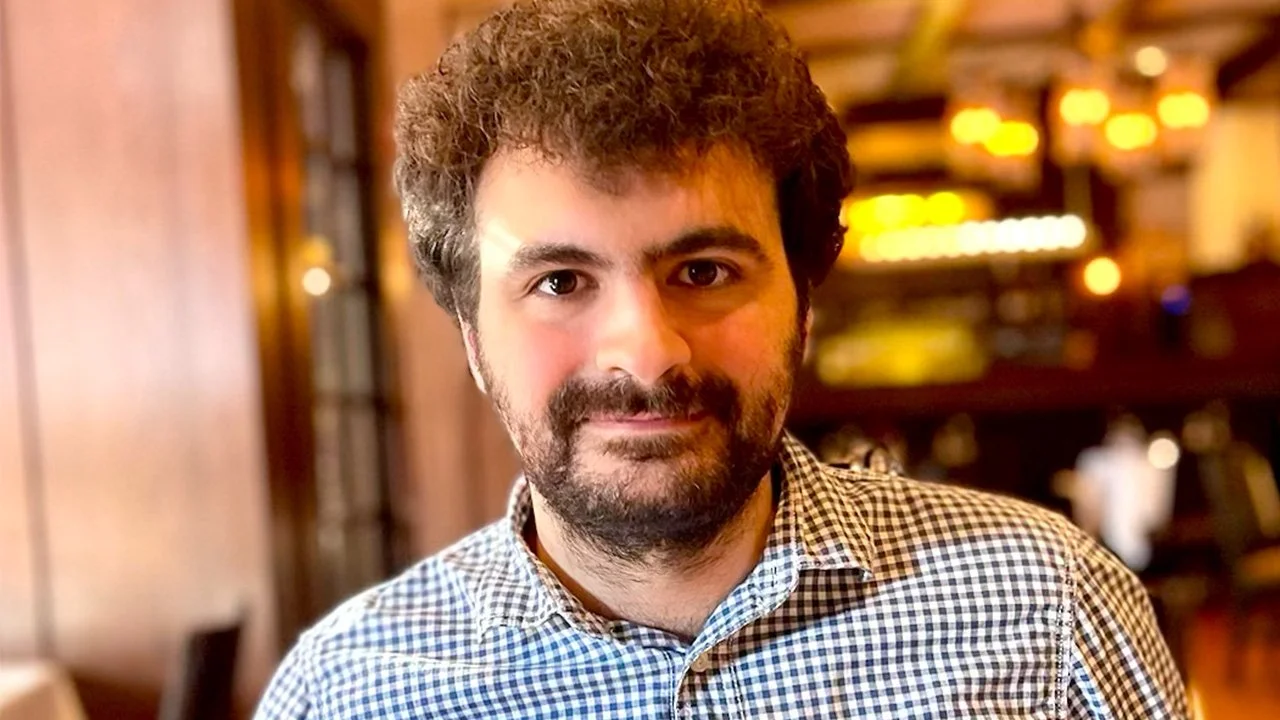
Mozilla’s 2024 Rise25 Honoree Interview: Aaron Gokaslan
What is the biggest tech & society issue we are currently facing?
The erosion of the creative commons, and public data commons. As AI models become more commercialized, we are seeing the websites which the host the content, make it more difficult to access, to both reduce distribution costs; and also to monetize their collections of public domain and freely licensed content. As a result, we may lose access to a large amount of this data on public websites, and this data will only be accessible to large companies that have either paid for it, or already have scraped it.
How does your role help tackle thorny tech & society issues?
Aaron Gokaslan is a PhD student at Cornell Tech, focusing on data, systems, and applications for generative models under the guidance of Volodymyr Kuleshov. He collaborates closely with Noah Snavely, Sasha Rush, and James Grimmelmann. His research aims to keep generative model development open, accessible, and reproducible. Aaron has also published work on embodied AI, graphics, robotics, and 3D vision. He has worked on widely-used open source projects including OpenWebText, ROOTS, CommonCatalog, BLOOM, DBRX, TADNE, and Caduceus, which have collectively been downloaded by millions. His contributions have earned him a Community Contributor Award at PyTorchCon from the Linux Foundation for maintaining libraries like pybind11, habitat-sim, and Pytorch. Aaron serves on the advisory boards of Fidutam and EncodeJustice and also advocates for open-source AI as legislation begins to regulate the field. He helped develop the RAIL license as part of BLOOM, variants of which have been used by 1000s of models on HuggingFace downloaded by millions of users.
How did your career grow, and what advice would you give to others wanting to be in a similar position?
I started working on generative AI back in 2017 while I was undergrad. I saw how the technology was going to be broadly impactful, and wanted to start reaching all the amazing things that this technology could do. Eventually, I came across the OpenAI GPT-2 model, a predecessor to ChatGPT. I was really disappointed when I found AI was not planning on immediately open sourcing the technology, so I decided I would go and make my own model and open source to both learn about the technology and allow others to build on top of it. I then began to think about what type of barriers: financial, legal, technical, and policy challenges would prevent this type of technology from remaining open source in the future, and how we could fix that. My career advice is to work on projects you believe will matter, even if others don’t see the potential right away. When I started working on large language model replication and open source in 2019, or GenAI in 2017, there wasn’t much interest. The technology wasn’t quite there yet, but it was improving rapidly. I saw the potential and was confident we could make it work. I also saw the long term importance of having these tools remain open source, not just for text generation, but other fields like scientific research, image generation, and many other applications. I followed my passion for research that could truly make a difference, even when it wasn’t the most popular path. Eventually, generative AI started working exceptionally well and became a tool people use every day. It’s been incredibly rewarding to be part of that journey. My advice is to pursue what interests you, even if it’s challenging or uncertain. Eventually, your efforts will likely pay off.
It’s an honor to have open source work recognized, especially by an organization like Mozilla. Ensuring that AI remains open, efficient, and accessible to all often takes a backseat to the flashiest demos from startups and companies alike.
What backgrounds or voices would you like to see more of in the Responsible Tech ecosystem?
It’s an honor to have open source work recognized, especially by an organization like Mozilla. Ensuring that AI remains open, efficient, and accessible to all often takes a backseat to the flashiest demos from startups and companies alike. Nevertheless, it remains incredibly important: generative AI will become the defining technology of this generation. Allowing people outside of a few tech companies to use it, understand it, research, and build upon it will help further improve the technology's impact and overall benefit to society.
What is your vision of a better tech future and how we can we move towards that vision?
A lot of the discourse around AI regulation is driven by well-funded tech companies that sell AI as a service, often leaving out scientific researchers, academic experts, and marginalized communities. When discussing how to approach a transformative technology like AI, we should seek input from a wide variety of experts, not just those deploying these technologies into production. In addition to tech CEOs, we need policy experts, advocates, and researchers to contribute their perspectives, so we can design AI that works for everyone. This approach should extend beyond regulation to the creation, data curation, evaluation, and deployment of AI. More importantly, the focus should be on how companies and governments use AI, as the way these technologies are applied often determines their impact more than the technology itself.
What does recognized as a Rise25 winner mean to you?
It’s an honor to have open source work recognized, especially by an organization like Mozilla. Ensuring that AI remains open, efficient, and accessible to all often takes a backseat to the flashiest demos from startups and companies alike. Nevertheless, it remains incredibly important: generative AI will become the defining technology of this generation. Allowing people outside of a few tech companies to use it, understand it, research, and build upon it will help further improve the technology's impact and overall benefit to society.