Building a Trust & Safety Career: Sandra Khalil, All Tech Is Human's Head of Partnerships
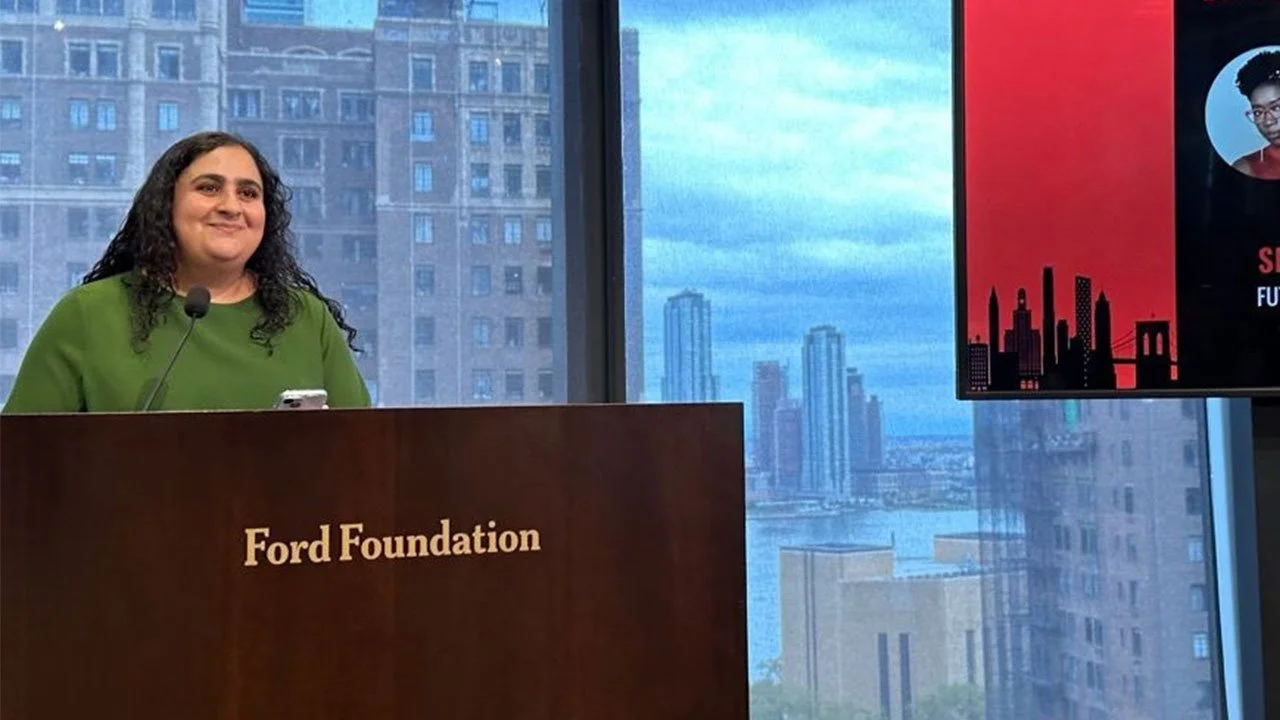
By Sandra Khalil
As a kid, when people asked me what I wanted to be when I grew up, I would say, “a police officer to protect my family.” I was always inclined to help others, especially those in need. I knew that value, paired with a curiosity about the world and its cultures, would manifest in my career.
I started my career in Cairo, Egypt working for a nonprofit organization supporting orphans and at-risk youth. I was freshly graduated from Binghamton University with degrees in Political Science and Arabic, eager to put the latter to the test in my new home. While the adjustment to the work and new environment was challenging, it was incredibly rewarding. I cultivated strong relationships with the children, staff, and supporters, and took pride in my contributions’ impact on the organization. After a year or so, a colleague from my old internship site at the U.S. Mission to the United Nations was moving on to work for Oxfam and wanted to recommend me for her role. It was the right time to try something new with an offer I couldn’t refuse, so I accepted.
I made the bittersweet move back to New York and started my new role as a Program Coordinator for DOS international exchange programs (think Fulbright, the International Visitors Leadership Program, etc.). I enjoyed fostering people-to-people connections and helping both the delegations and their American counterparts learn more about one another’s work in their respective countries. And while we weren’t by definition a “mission-critical” office, I still enjoyed networking perks like credentials to enter UNHQ and free language classes through the UN Language Programme (where I cheekily became a Level 5 of 9 Mandarin speaker). A couple of years into my tenure, I wanted more for myself. I was excelling in my work and ready to take on more responsibilities with less supervision, but opportunities were limited. Many of my peers said I was lucky to be there and would’ve been content with what I had. I remember feeling guilty about my repeated requests for growth, but it was important for me not to stagnate. I decided to keep upskilling on the side while I identified my next step.
I developed a curiosity about nascent tech policy issues at the UN, especially tech’s intersection with diplomacy and tech-facilitated harm. One upskilling research rabbit hole after another, I came across a programming bootcamp and asked a close friend to accompany me to one of their info sessions. She regularly taught her coworkers programming basics so she’d be a helpful thought partner in my decision-making. If I could master languages like Arabic and Mandarin, I could certainly put the work in for foundational tech concepts and a technical skill. I was astonished when this friend discouraged me from attending. She said, “You’re a humanities person, humanities people don’t belong in tech.” The sentiment stuck with me, and I was successfully discouraged from pursuing the bootcamp. I continued business as usual until my office’s transnational security summit kindled my curiosity again. Our keynote address, which featured Manhattan District Attorney Cyrus Vance Jr., called back to the need for multistakeholder cooperation on transnational crime, including crime proliferated by tech. After his resonant speech and some encouragement, I left my post of almost three and a half years to work in the executive wing of the Manhattan District Attorney’s Office.
I was astonished when this friend discouraged me from attending. She said, “You’re a humanities person, humanities people don’t belong in tech.”
My first week on the job was eventful. The Antiquities unit had just retrieved a looted sarcophagus with forged paperwork from the Met. They’d been tracking this group’s criminal activity for a while and confirmed the stolen item with a helpful clue from Kim Kardashian’s viral Met gala photo. I went to the locked conference room to see it. The thieves had dumped Nedjemankh’s contents, all that was left behind was a broken mummified finger. I was heartbroken and wanted to help however I could. An exchange program delegation from the Egyptian Ministry of Antiquities was passing through New York very soon, so I quickly worked with my current and former colleagues to arrange a viewing and facilitate return discussions. While existing diplomatic channels would’ve sufficed in this scenario, I like to think this back-channeling helped expedite the sarcophagus’ return to Egypt. This supporting role in a triumph set the achievement bar pretty high.
A year into the job, I was tapped to lead support staff in the Special Victims Bureau (SVB), one of our office's most critical and sensitive departments. Specifically, I inherited 26 paralegals, analysts, and coordinators across the bureau’s 5 units, some of whom were in the same stage of life as me, or close to it. I had never been a people manager before but was certainly up for the challenge (which it was). The subject matter also resonated deeply; it was rewarding to be a familiar face and supporter to survivors engaging in the justice process. At times, I was a manager, an analyst, or a front desk colleague; no two days were the same in that respect. I navigated the pandemic, BLM movement, workplace bullying, and so much more with my team. I also made the decision, after much encouragement from trusted folks, to enroll part-time in a cyber policy grad program at NYU. I remember seeing first-hand how tech exacerbated the crime we addressed. Plus, our penal code didn’t sufficiently place punitive measures on things like cyberstalking simply because of how the code was written and legally interpreted. I desperately wanted to learn to proactively protect these survivors online, which I later learned was “trust and safety” work.
Towards the end of my tenure with SVB, I discovered All Tech Is Human. A classmate encouraged me to join the community, which was a place to learn more about the trust and safety field and take a break from the “cyber is the fifth domain of warfare” discussions. I joined and lurked on Slack for a few months. When an associate role opened up, I applied. I chatted with David for almost two hours about what was going well, what needed work, and what the road ahead looked like, and ultimately felt like it was another challenge worth taking. Fast forward to today, I’ve helped drive our engagement and collaborations with like-minded organizations and leaders in the space, and I have an opportunity to shape important resources on the trust and safety and tech policy issues I took an early interest in. I’ve also seen our significant role as a nonprofit in shaping and professionalizing the field of trust and safety with robust workforce development and career services, as well as a community full of the next generation of ethically-minded professionals. I’m proud of the work we’re doing and our growth journey, and eager to see what comes next.
TRUST & SAFETY ACTIVITIES BY ALL TECH IS HUMAN
Read All Tech Is Human’s Trust & Safety knowledge hub
Apply to join All Tech Is Human’s Trust & Safety working group
Apply to our next mentorship cohort, where you can be mentored by Trust & Safety professionals.
Apply to attend The Future of Trust & Safety, a curated gathering on May 14 in NYC.
Join our Slack community (8k members across 90 countries)
About All Tech Is Human
All Tech Is Human is a non-profit committed to building the world’s largest multistakeholder, multidisciplinary network in Responsible Tech. This allows us to tackle wicked tech & society issues while moving at the speed of tech, leverage the collective intelligence of the community, and diversify the traditional tech pipeline. Together, we work to solve tech & society’s thorniest issues.
Join our working groups on Cyber & Democracy and Tech Policy
Read our reports, such as our Responsible Tech Guide and our recent Responsible Tech Org List 2024
Join our Slack community of over 8k members across 89 countries, with numerous individuals focused on creating healthy digital spaces
Read our Responsible Tech Job Board and join our talent pool