All Tech Is Human Library Podcast Series #11 | Gabo Arora
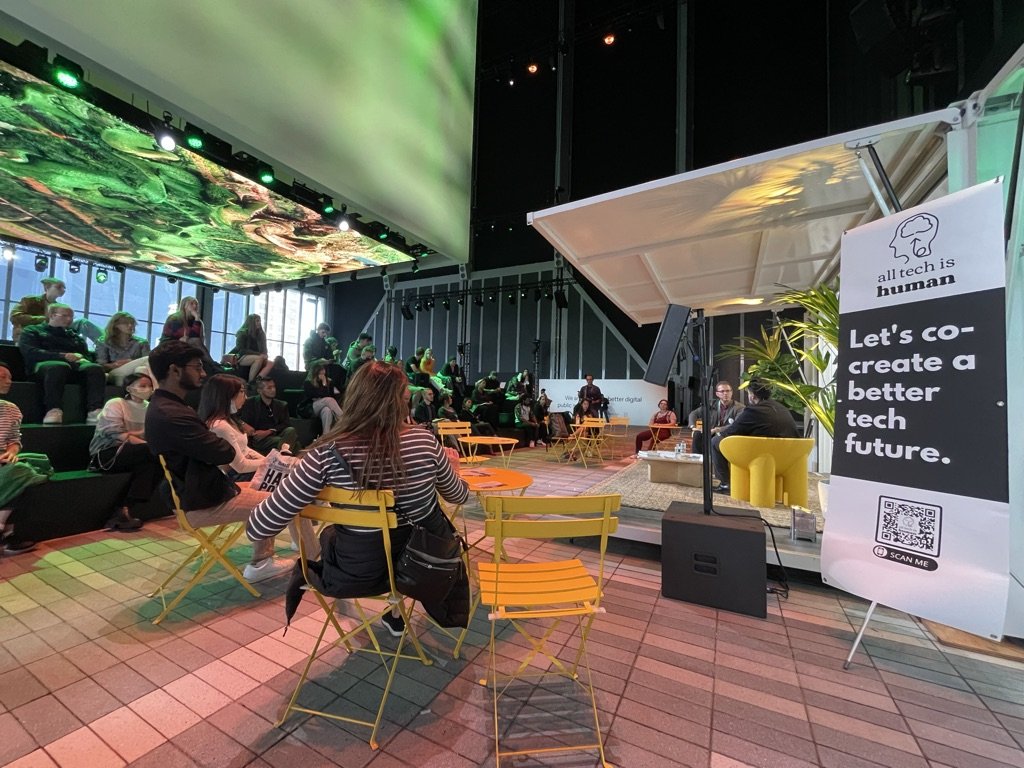
In the eleventh conversation of a sixteen-part All Tech is Human Library Podcast interview series, immersive artist, professor, and entrepreneur Gabo Arora joins David Ryan Polgar for a conversation about the transformative potential of immersive storytelling. How can immersive stories and emerging technologies allow us to deepen our capacity for empathy? Check out the full podcast series here.
About Gabo Arora
Gabo Arora is a world renowned multi-award winning immersive artist, professor, entrepreneur and former UN diplomat who works with the most cutting-edge emerging technologies, including virtual and augmented reality, to tell some of the most important stories of our time. Widely recognized as a pioneer of new documentary formats, his work, part of the permanent collection of the Museum of Modern Art in New York, has been described by the BBC and LA Times, amongst many others, as “game changing”, “powerful, moving and without precedent”, and “transcending all the typical barriers of rectangular cinema.” He has designed and led campaigns of significant measurable impact, raising many millions of dollars, for the United Nations, UNICEF, USC Shoah foundation and the Nobel Peace Prize committee. He has had the honor of being the UN’s first-ever Creative Director; a Davos World Economic Forum Arts and Culture Leader; a member of the Council on Foreign Relations; and is the Founding Director of a new lab and academic department - the first of its kind - dedicated to Immersive Storytelling and Emerging Technologies (ISET) at Johns Hopkins University. His creative tech and production studio LIGHTSHED.IO is based in Brooklyn.
Key Takeaways
Using tech as a vehicle of empathy can serve a greater human purpose. It can move us to change, care, and evolve in our humanity.
We can create demand for tech to serve us and work better by creating more space for intersectional collaboration to address its wicked problems.
A better tech future will involve not feeling compromised by its functions, but rather a natural symbiotic relationship serving an intentional purpose in our lives.
Quotes
“And, I fell in love with virtual reality without even doing it because I really felt that if it only held a sliver of its promise, that people would really understand by going there, by being there, by connecting with people, by being transported to these locations, that they could in some sense understand the gravity of what was happening.” 2:50 - 3:11
“And in 2015 and January, I debuted what is considered the first sort of documentary and virtual reality called Clouds Over Sidra, which is about a 12-year-old girl named Sidra who gives you a tour of her camp in Zaatari in Jordan, which is her new home, and this debuted at Davos. And then really sparked the whole empathy conversation around these technologies that didn't really exist before, because virtual reality was for gaming, it was for entertainment, it was for other things. So it was really edifying to see that these new technologies could serve a human purpose.” 3:11 - 3:53
“...[What] makes us change, what makes us care, what makes us kind of turn into different people than we were before? And a lot of that is experiential. A lot of it is the ability to embody, to have different perspectives, to have our senses engaged in ways that is much more active and much more emotional. And I think that's what these new technologies do. 4:22 - 4:49
“And I was very, very, motivated by film. But in the mid-nineties to the late nineties film, the film I loved, was changing and being shaped by technology. Technology was kind of destroying film in some ways. And it was in a lot of ways I felt this sort of mourning of like everything that I wanted that was vintage, that was kind of going away. So I became very anti-technology and I became very disillusioned and I gave up film and that's how I ended up at the UN because I knew that I needed to do something with my life, so I might as well do something that I felt was meaningful. And when you're anti-something, when you're against something, when you encounter something like a technology that you think you're not going to like, it catches you by surprise. And I think that's when amazing things happen if you're really humble to it. And I never thought I would be working in technology, but when I encountered virtual reality, I said, 'Wow, now I can finally tell stories that in some ways are meant for our time.'” 8:41 - 9:45
“And I guarantee you that if you did that in real life, if you were able to go to a camp and have dinner with people, let's say in Poland now coming out of Ukraine. You would be forever committed to doing something about that. And I think that's what these technologies do. They give you that experience of being with people at their level, of having them kind of share their life with you in a way that's not just passive and one-sided. You feel engaged, you feel eye contact. And as these technologies mature, there will be co-presence, they will be on the other side of their character. You will have a moral obligation in the digital world that will be very different when we engage with where everything in the metaverse is going right now.” 10:41 - 11:27
“...It feels very intimidating. It's very mystifying, but really we need more [diversity], and young and old, and all different people creating and realizing that if we don't become creators, we're just passive consumers. And if we are passive consumers, we don't have a say in how these technologies will be built and shaped and what effect they have on our society. But we are now in the age of creation, everyone can create. The reason TikTok is dominating is because its creator tools are much more accessible and easier. So I think…we have to democratize those tools and that's what we're going to try to do with LIGHTSHED [and] with these new spaces.” 14:53 - 15:34
“I think [a better] tech future…doesn't feel like it's a necessary evil, or a lesser evil, or something you have to do. It's amazing that you know how social media…what we compromise with our data, what we compromise by watching those ads and feeling manipulated because we feel like we have to, right? And I feel like a tech future where we don't feel at all that we're making those compromises, that it feels organic to us, that it feels natural, that it's something that we would never feel and say is unnatural. And I know that sounds crazy, but when you connect with humane tech, you never for a second feel that it's not something that shouldn't exist in the world. And that's what I would hope for.” 16:01 - 16:48
Learn More About Gabo Arora
Website | Twitter
Credits:
David Ryan Polgar - Moderator
Gabo Arora - Interviewee
Unfinished Live - Producers
